
China-Russia Strategic Alliance Grows; Global Security and Health Threats Intensify; Taiwan's Cultural Diplomacy Shines
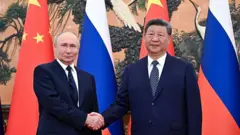
China-Russia Strategic Ties Deepen Amid Global Geopolitical Shifts
As recent reports highlight, Chinese President Xi Jinping and Russian President Vladimir Putin are reaffirming and deepening their countries' strategic partnership amid ongoing global geopolitical shifts. This development, underscored by several articles from diverse media outlets, carries significant implications for international markets, political alliances, and diplomatic strategies.
Xinhua, China's state news agency, emphasizes the unprecedented level of Sino-Russian relations, with Putin's visit to China marking a significant diplomatic engagement. The narrative suggests a deliberate effort by both nations to maintain stability and mutual confidence, viewing their relationship as a model for great power relations. Xinhua's coverage aims to project a positive image of China-Russia ties as a stabilizing force in international politics, potentially influencing global perceptions and policy decisions.
Meanwhile, the Liberty Times focuses on the implications of Putin's remarks on Taiwan, interpreting them as a strategy by Beijing to amplify internal divisions within Taiwan. The paper suggests that these comments are part of a broader Chinese strategy to leverage global perceptions and influence Taiwan's internal political dynamics, a perspective that highlights the strategic use of rhetoric in regional geopolitical maneuvers.
The BBC report underscores the economic dimensions of the Sino-Russian relationship, noting the potential for increased energy cooperation, including discussions on a new natural gas pipeline. This focus on economic ties highlights the strategic interdependence between the two countries, particularly in the context of Western sanctions on Russia. The BBC's analysis suggests that this energy partnership could alter global energy markets and challenge Western energy policies.
In contrast, The New York Times frames the Sino-Russian alliance within the context of U.S. foreign policy, particularly regarding arms sales to Taiwan. The article implies that the deepening China-Russia ties could complicate U.S. strategic interests in the Asia-Pacific region, particularly as it seeks to balance its commitments to Taiwan with broader geopolitical considerations.
Overall, these reports collectively suggest that the strengthening of China-Russia relations is not merely a bilateral affair but a development with far-reaching global implications. For international markets, the deepening ties could mean shifts in energy trade routes and investment flows. For policymakers in the U.S. and EU, this alliance presents a challenge to existing diplomatic and economic strategies, necessitating a reevaluation of how to engage with both China and Russia amid their closer cooperation. Readers outside China should be aware of these dynamics as they reflect broader strategic realignments that could impact global stability and economic trends.
Gun Violence in the US and Turkey: A Global Perspective on Security and Policy Implications
Recent events highlight the ongoing challenge of gun violence in both the United States and Turkey, raising questions about security and policy measures on a global scale. In California, a tragic shooting at an Islamic center in San Diego resulted in five fatalities, including two suspects. The incident, reported by Xinhua, underscores the persistent issue of gun-related violence in the US, a country grappling with complex debates over gun control and public safety.
Meanwhile, in Turkey's southern province of Mersin, a similar incident unfolded, as reported by Xinhua. A gunman, identified as a 37-year-old man named Meiting, killed six people and injured eight others in multiple shootings, including an attack on a restaurant. The assailant remains at large, highlighting the challenges Turkish authorities face in managing violent crime.
These developments indicate a broader pattern of gun violence that transcends national borders, prompting international discourse on effective policy responses. For global markets and investors, the instability associated with such incidents can affect consumer confidence and economic stability, particularly in regions heavily reliant on tourism and foreign investment.
For policymakers in the US, EU, and beyond, these incidents reinforce the urgent need for comprehensive strategies that address the root causes of gun violence while respecting cultural and legal contexts. The international community, including organizations like the UN, may need to consider collaborative approaches to enhance security and prevent similar tragedies.
Readers outside China should care about these developments as they reflect a shared global challenge that requires coordinated efforts and innovative solutions. The broader strategic implications include potential shifts in international relations, as countries seek to balance domestic security concerns with global cooperation on human rights and public safety.
Hantavirus Death in Colorado Spurs Global Health Vigilance Amid Broader Context of Viral Outbreaks
Recent reports from Sina and Xinhua highlight the discovery of a hantavirus-related death in Colorado, U.S., which has been confirmed as unrelated to the current 'Hondius' cruise ship outbreak. This news underscores the persistent threat of zoonotic diseases and their potential to affect global health security. The Colorado case involved a local resident whose infection was linked to contact with rodents, reinforcing the importance of public awareness about avoiding exposure to rodent habitats to prevent infection.
While the hantavirus infection risk remains low, the incident is a reminder of the interconnectedness of global health systems. International markets, especially those reliant on travel and tourism, may experience fluctuations due to heightened health safety measures and potential travel advisories. For businesses and investors, this serves as a cautionary tale about the need for robust health protocols to mitigate disruptions.
From a policy perspective, both the U.S. and EU may need to reevaluate their current health surveillance and response strategies to better prepare for similar outbreaks. This event could catalyze discussions on enhancing international cooperation and resource sharing to address zoonotic diseases, which often require coordinated global action.
Globally, readers should be aware that such incidents, though isolated, have broader implications. They highlight the necessity for continuous monitoring of emerging diseases and the importance of transparency in reporting health threats to prevent misinformation and panic.
Comparatively, Sina and Xinhua's coverage emphasize the context of the outbreak and its containment, while also noting the unrelated but concurrent 'Hondius' cruise ship outbreak of Andes virus—a member of the hantavirus family. This juxtaposition may serve to inform readers of the diverse threats within the same viral family, urging vigilance without causing undue alarm.
Ebola Outbreak in Gabon Raises Global Health Concerns Amidst Rising Fatalities
Recent reports from Xinhua and CCTV highlight the escalating Ebola outbreak in Gabon's eastern region of Ogooué-Ivindo Province. The Xinhua article details that 116 suspected Ebola cases have resulted in death, with an additional 435 cases currently under observation and treatment. The Gabonese government continues to conduct laboratory tests and epidemiological investigations to confirm the virus's presence in the reported cases. In contrast, the CCTV report, while acknowledging the outbreak, provides less detailed coverage.
The outbreak's implications are significant on a global scale. The World Health Organization has declared the situation a 'public health event of international concern,' urging neighboring countries like Rwanda, Zambia, and Tanzania to enhance border health monitoring, entry screening, and epidemic preparedness. For international businesses and investors, this development signals potential disruptions in regional trade and travel, necessitating contingency planning and risk assessments for operations in Central Africa.
For policymakers in the US, EU, and other regions, the outbreak underscores the importance of global health security measures and international cooperation in epidemic response. The call for increased vigilance and preparedness highlights the interconnected nature of global health challenges, emphasizing that outbreaks in one region can have far-reaching impacts worldwide. Readers outside China should be aware of the broader strategic implications, including the potential for increased health aid and diplomatic engagement with affected regions to mitigate the outbreak's effects.
Taiwan's Indigenous Baseball Initiative Highlights Global Cultural and Economic Implications
In a significant cultural and philanthropic development, the Liberty Times reports on a public welfare project titled 'The Future Starts Now', initiated by the Taiwan Indigenous Baseball Development Association in collaboration with e-commerce platforms. This initiative, led by Lin Chih-sheng, a prominent figure in Taiwanese baseball, aims to channel attention and resources back to rural and indigenous communities.
The project exemplifies how sports can serve as a conduit for cultural transmission and community rebuilding, especially following natural disasters like the typhoons that have devastated Hualien. Lin’s project not only provides professional baseball gear to young players but also supports their psychological recovery post-disaster. This underscores a broader strategy of utilizing sports and music to foster resilience and cultural pride within indigenous communities.
Globally, this initiative highlights the intersection of sports, culture, and economic development. For international investors and businesses, this represents a growing trend where corporate social responsibility and community engagement are becoming integral to brand identity and market strategy. As companies and investors look to Asia for growth opportunities, understanding these cultural dynamics becomes crucial.
For policymakers in the US and EU, the initiative offers insights into soft power strategies that emphasize cultural diplomacy and people-to-people exchanges. This approach can serve as a model for fostering goodwill and mutual understanding in international relations, particularly with regions that have significant indigenous populations.
Overall, this development in Taiwan is a microcosm of how cultural initiatives can have far-reaching economic and strategic implications, influencing international perceptions and fostering cross-cultural connections. It serves as a reminder of the potential for cultural initiatives to shape global narratives and drive socio-economic change.