
Global Implications of Japan's Defense Shift; US-Mexico Coordination Challenges; China's Economic Resilience Amid Seismic Shifts
Explosive Incident at Japanese Military Drill Raises Concerns for Regional Stability
Recent reports from multiple sources highlight a tragic incident during a military drill in Japan, where a tank explosion resulted in several casualties. This event occurred at the 'Sunrise Training Ground' in Oita Prefecture, a significant site for Japan's Ground Self-Defense Force (GSDF) exercises. The implications of this incident extend beyond the immediate tragedy, raising questions about military safety protocols and regional security dynamics.
CCTV reports that the explosion at the training ground caused the deaths of three military personnel. This report emphasizes the severity of the incident and the need for a thorough investigation into the cause of the explosion. The focus here is on the official response and the potential impacts on Japan's military operations.
In contrast, the World Journal provides a more detailed account, noting that the explosion occurred during a live-fire training exercise involving a Type 10 tank, a crucial component of Japan's defense strategy. This report hints at the possible implications for Japan's military readiness and the broader regional security architecture, particularly in the context of rising tensions in the Asia-Pacific region.
Sina offers additional context by describing the training ground as a site where both Japanese and U.S. forces conduct joint exercises. This detail underscores the strategic importance of the location and suggests potential implications for U.S.-Japan military collaboration, as well as the broader geopolitical landscape.
Finally, another CCTV article reiterates the incident's occurrence and casualty count, providing a brief overview without additional analysis. Similarly, another Sina report confirms the details of the explosion and the state of the injured personnel.
These developments indicate a need for enhanced safety measures and could lead to increased scrutiny of military exercises not only in Japan but also in other nations involved in similar drills. For international markets and businesses, especially those in the defense sector, this incident may lead to a reevaluation of safety protocols and potential impacts on defense contracts. For policymakers in the U.S., EU, and Asia-Pacific, this incident serves as a reminder of the delicate balance of military readiness and safety, potentially influencing future military collaborations and strategic postures in the region.
US-Mexico Anti-Drug Operation Tragedy Raises Questions on Coordination and Sovereignty
Recent reports from Liberty Times and World Journal highlight a tragic incident involving a joint anti-drug operation between the United States and Mexico in the northern region of Chihuahua. The operation, which was not officially sanctioned by the Mexican federal government, resulted in a fatal accident claiming the lives of two U.S. Embassy personnel and two Mexican officials.
The Mexican President, Claudia Sheinbaum, has publicly stated that the Mexican Interior Ministry was unaware of the operation, emphasizing that any cooperation with foreign entities without federal authorization could be deemed unconstitutional. This stance underscores the complex dynamics of sovereignty and bilateral cooperation, as highlighted by both Liberty Times and World Journal.
The incident underscores the challenges in U.S.-Mexico collaboration on drug enforcement, an area of significant concern for both countries. The lack of coordination at the federal level raises questions about the effectiveness and legality of such joint operations, potentially straining diplomatic relations. For international markets and investors, these developments could signal potential instability in cross-border operations and enforcement, affecting sectors reliant on smooth U.S.-Mexico trade relations.
Moreover, the U.S. Ambassador to Mexico, Ronald Johnson, expressed condolences and highlighted the risks faced by officials dedicated to ensuring societal safety. This tragedy serves as a reminder of the ongoing challenges in combating drug trafficking, a key issue affecting U.S. and Mexican domestic policies, as well as broader regional stability.
For the U.S. and EU policymakers, this incident may prompt a re-evaluation of engagement strategies with Mexico, particularly in areas involving security and law enforcement cooperation. It emphasizes the need for clear communication and adherence to legal frameworks to ensure both nations' sovereignty and mutual interests are respected.
Japan's Eased Arms Export Restrictions Signal Strategic Shift with Global Repercussions
Japan's recent decision to relax its arms export restrictions marks a significant shift in its post-war pacifist policies, with far-reaching implications for international geopolitics and defense markets. This strategic move, as covered by several outlets, reflects Japan's evolving role on the global stage.
The New York Times highlights Japan's departure from its traditional pacifist stance, noting that the policy change allows for the export of lethal weapons. This decision aligns with Japan's broader strategy to bolster its defense capabilities amid regional security tensions, particularly with China and North Korea. For international markets, this shift may signal new opportunities in the defense sector, potentially prompting increased competition and collaboration with Western defense industries.
Xinhua offers a detailed account of the policy adjustments, emphasizing the internal approval process involving Japan's Prime Minister and defense officials. This narrative underscores the domestic controversies and debates surrounding Japan's security posture. The report suggests that Japan's enhanced arms export policy could escalate regional military competition, particularly affecting China's strategic calculations and potentially straining Sino-Japanese relations.
Sina's analysis delves into the motivations behind Japan's policy shift, highlighting economic factors such as boosting defense production capacity and revitalizing its economy. The article argues that Japan aims to strengthen ties with allies like the United States and Australia, thereby increasing its geopolitical influence in the Asia-Pacific region. This development could lead to a recalibration of alliances and defense strategies among countries concerned with China's growing assertiveness.
Overall, Japan's policy change is a pivotal moment with global ramifications. Internationally, it may alter defense procurement dynamics, influence regional security policies, and reshape the strategic balance in the Asia-Pacific. For the US and EU, this shift could necessitate adjustments in their diplomatic and military engagements with Japan and other regional actors. As Japan navigates this new path, the international community will be closely watching its impact on regional stability and global security architecture.
US-Iran Negotiations: A Renewed Push with Global Ramifications
The recent flurry of reports on US-Iran negotiations highlights a critical juncture in international diplomacy, with potential wide-reaching effects on global markets and geopolitical stability. The New York Times article underscores Iran's internal and external pressures as it navigates peace talks. Iran's mixed signals reflect a complex balancing act between domestic hardliners and international diplomatic pressures, particularly from the US. This scenario not only influences regional stability in the Middle East but also affects global energy markets, as uncertainties in the region can lead to fluctuations in oil prices, impacting businesses and consumers worldwide.
Meanwhile, Sina emphasizes the US administration's stance, describing the negotiations as being on the ‘verge’ of an agreement. The White House's cautious optimism suggests a strategic approach to avoid previous pitfalls, such as the abrupt withdrawal from the JCPOA under the Trump administration. This cautious optimism can influence international investors and policymakers as they assess the potential for renewed stability in the region, which would be beneficial for global trade and energy security.
The World Journal offers a historical perspective, comparing current negotiations to the 2015 JCPOA. The analysis notes differences in negotiation style and the broader geopolitical landscape, highlighting the challenges of achieving a sustainable agreement given past disruptions. This comparison is crucial for understanding the strategic shifts in US foreign policy and their implications for international relations. For global audiences, this underscores the importance of reliable diplomatic agreements in maintaining international security and economic stability.
These articles collectively reveal the intricate dynamics at play in US-Iran negotiations and their potential impact on global affairs. For businesses and investors, the outcome of these talks could influence market stability and energy prices. Policymakers in the US, EU, and beyond must consider these developments in their strategic planning, as the ripple effects of a renewed agreement—or lack thereof—could affect international alliances and economic policies. Ultimately, understanding these negotiations is vital for readers worldwide as they navigate the interconnected landscape of global politics and economics.
Strategic Implications of Maritime Blockades in the Hormuz Strait: A Global Perspective
The Hormuz Strait, a critical chokepoint for global oil shipments, has recently seen increased tensions due to a series of maritime blockades and military maneuvers. These developments have significant implications for international markets, regional security, and global energy supplies.
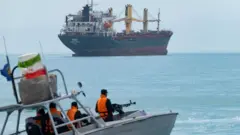
BBC reports on the strategic use of blockades, highlighting historical precedents where such measures have been employed to exert economic pressure and disrupt trade. The article references the U.S. Navy's intervention involving the Iranian-flagged vessel 'Touska,' emphasizing the blockade's role in limiting Iran's maritime activities. The historical context provided by BBC illustrates that while blockades can be effective in applying pressure, their broader implications often surpass immediate military objectives, affecting global trade and economic stability.
Sina offers a detailed account of the U.S. military's use of unmanned systems in mine clearance operations within the strait. The article discusses the deployment of autonomous underwater vehicles and the potential use of dolphins trained for mine detection, showcasing the technological advancements in modern naval warfare. This reflects a shift towards minimizing human risk and enhancing operational efficiency, which could influence future military strategies and defense investments globally.
Xinhua reports on the impact of these military actions on shipping traffic through the strait, noting a significant reduction in the number of vessels passing through. The article underscores the economic repercussions of such disruptions, as the strait is a vital artery for global oil supplies. The reduction in shipping traffic highlights the vulnerability of international supply chains to geopolitical tensions, prompting a reassessment of energy security policies in the U.S., EU, and other regions reliant on Middle Eastern oil.
These articles collectively paint a picture of the strategic importance of the Hormuz Strait in global geopolitics. For international businesses and investors, the stability of this region is crucial for the smooth operation of energy markets and the avoidance of price volatility. Policymakers in the U.S. and EU must consider these developments when formulating foreign policy and energy security strategies. The broader strategic implications include the potential for increased military presence in the region, shifts in global energy alliances, and the need for technological innovation in maritime operations.
Repatriation of Chinese Volunteer Soldiers' Remains from South Korea: A Symbol of Sino-Korean Cooperation and Its Global Implications
Recent developments highlight the ongoing cooperation between China and South Korea in the repatriation of Chinese People's Volunteer soldiers' remains. According to Xinhua, a delegation from the Chinese Ministry of Veterans Affairs has traveled to South Korea to oversee the return of the 13th batch of remains. This initiative, which has been ongoing since 2014, reflects a commitment to international law and humanitarian principles. Such actions are not only significant for bilateral relations but also serve as a poignant reminder of the historical ties and the potential for reconciliation through shared history.
Meanwhile, Sina reports on a briefing held in Shenyang, Liaoning province, highlighting the ceremonial aspects of the repatriation process. The involvement of various governmental and military bodies underscores the solemnity and importance China places on this event. Such ceremonies reinforce national pride and remembrance, which are key to understanding China's domestic narratives and their influence on foreign policy.
For international markets and investors, these developments indicate a stable and cooperative regional environment in Northeast Asia, which can positively influence economic relations and trade agreements. For the US, EU, and other regions, understanding such symbolic gestures is crucial as they reflect China's approach to diplomacy and historical reconciliation, potentially affecting broader geopolitical strategies and alliances.
Overall, the repatriation efforts symbolize a bridge between past conflicts and future cooperation, emphasizing the importance of historical memory in international relations. For global audiences, recognizing these efforts is essential in grasping the broader strategic and economic implications of Sino-Korean relations and their impact on regional stability.
Undersea Earthquake Near Emperor Seamounts Raises Global Concerns Over Seismic Activity
Recent seismic activity near the Emperor Seamounts has caught international attention as a 5.6 magnitude earthquake struck the region. According to CCTV, the earthquake's epicenter was located at a depth of 80 kilometers, a detail that indicates a deep-sea event with potentially less immediate surface impact but significant geological implications.
The coverage by Sina echoes CCTV's report, highlighting information sourced from the China Earthquake Networks Center. This consistency in reporting underscores a shared reliance on authoritative seismic data, reflecting China's centralized approach to disseminating information about natural events.
While the immediate consequences of the earthquake might appear localized, the implications resonate globally. Seismic events in this region can affect international maritime routes, potentially disrupting global shipping lanes that are crucial for trade. Additionally, such undersea earthquakes can serve as precursors to larger tectonic shifts, raising concerns about volcanic activity in the Pacific Ring of Fire, which could have broader environmental and economic impacts.
For international markets and businesses, the event serves as a reminder of the vulnerability of global supply chains to natural disruptions. It also prompts discussions among policymakers in the US, EU, and Asia-Pacific on enhancing disaster preparedness and resilience in key maritime regions.
China's New Barcode Regulations: Implications for Global Trade and Consumer Safety
The recent implementation of the revised Commodity Barcode Management Measures in China, which took effect on May 1, 2023, has significant implications for international trade, consumer safety, and global supply chains. The changes introduced by China's State Administration for Market Regulation (SAMR) aim to enhance the functionality and scope of product barcodes, transforming them into a more comprehensive 'identity card' for goods.
The revised regulations remove the need for printed certification and import verification, reducing the administrative burden on businesses. This is expected to streamline operations for over 650,000 companies and affect more than 2.4 billion product types, enhancing efficiency in various sectors such as industrial products, food, and healthcare. This move is likely to be welcomed by international businesses operating in China, as it simplifies compliance and reduces costs, thereby potentially increasing their competitiveness in the Chinese market.
Moreover, the enhanced barcodes incorporate more detailed product information, including manufacturing details, quality standards, and inspection reports. This development is crucial for consumers, as it provides greater transparency and assurance regarding product authenticity and safety, which is increasingly important in a global market concerned with food safety and counterfeit goods. For international markets, this could mean a higher standard of goods being exported from China, potentially affecting import regulations and safety standards abroad.
On a broader scale, the new barcode system supports the digital economy and modern logistics infrastructure in China, serving as a key component in ensuring food safety, quality control, and consumer rights protection. It aligns with global trends towards digital transformation and traceability in supply chains. For the U.S., EU, and other regions, this could mean adjusting their own regulatory frameworks to ensure compatibility and maintain trade relations, particularly in sectors heavily reliant on Chinese imports.
These changes are not only about enhancing consumer convenience but also about fostering a more robust and transparent marketplace. By facilitating faster and more accurate product tracking, the new regulations can help mitigate risks associated with product recalls and enhance overall supply chain resilience. This can have a ripple effect globally, as businesses worldwide may need to upgrade their systems to interact seamlessly with China's new standards.
In summary, China's revised barcode management measures underscore the country's commitment to integrating advanced technology into its economic framework, with significant implications for global trade practices, regulatory harmonization, and consumer safety. As China continues to refine its regulatory environment, international stakeholders will need to stay informed and adapt to these changes to leverage opportunities and mitigate potential challenges in the global marketplace.
For further details, you can read the full articles on Xinhua and Xinhua Fortune.
Japanese Political Visits to Yasukuni Shrine Escalate Regional Tensions: Global Implications
Recent developments surrounding Japanese political figures' visits to the Yasukuni Shrine have intensified regional tensions, particularly affecting China-Japan relations. On April 21, Japanese Prime Minister Yoshihide Suga, along with other political leaders, offered tributes at the controversial Yasukuni Shrine, which honors Japan's war dead, including convicted war criminals from World War II. Sina News highlighted that this act was seen as a political provocation, especially on the 80th anniversary of the Tokyo Trials, which judged the wartime leaders.
The shrine visits have historically strained Japan's relations with its neighbors, particularly China and South Korea, who suffered under Japanese wartime aggression. Another report by Sina News reiterated the backlash from both domestic and international communities, emphasizing the shrine's role in glorifying Japan's militaristic past.
For international markets and businesses, these developments are more than symbolic. They could influence regional stability, affecting trade routes and economic partnerships in East Asia. For policymakers in the US and EU, the situation demands careful navigation to maintain diplomatic balance while supporting regional allies. The visits risk further complicating the already delicate geopolitical landscape in Asia, where historical grievances continue to impact contemporary alliances and economic strategies.
Global readers should note that such actions by Japanese leaders are not isolated events but part of a broader narrative that could reshape regional dynamics. The strategic implications include potential shifts in military postures and alliances, affecting global supply chains and international policy frameworks. This issue underlines the importance of historical memory in international relations and its power to influence current and future geopolitical strategies.
China's Economic Resilience Amid Global Financial Volatility: Implications for International Markets
Recent economic data released by China's National Bureau of Statistics indicates a robust start to the year for the Chinese economy, despite facing complex international and domestic challenges. The data shows a 5.0% year-on-year GDP growth in the first quarter, an acceleration from the previous quarter. This growth is supported by a 6.1% increase in industrial output and a 5.2% rise in the service sector. These figures underscore China's economic resilience and potential to withstand global financial market turbulence, offering a strong foundation for Chinese assets.
China's economic stability is highlighted by the relative strength of its stock markets. Compared to the significant volatility in markets such as Japan and South Korea, China's A-share market has demonstrated remarkable resilience, with its ChiNext Index reaching a decade-high. This stability is further reflected in the strong performance of the Chinese yuan against the US dollar, setting new highs since March 2023.
For international investors, this resilience presents China as a stable investment option amidst global uncertainty. The inherent stability and controllability of Chinese assets offer long-term attractiveness, especially when global markets are characterized by heightened uncertainty.
The structural shift towards domestic demand and policy flexibility provides China with a buffer against external shocks. The country's ability to maintain fiscal and monetary policy maneuverability is crucial, as it retains the space to adjust policies as needed to support economic growth. This adaptability is appealing to long-term capital, suggesting a safer investment environment compared to other economies grappling with more severe fluctuations.
The strategic implications for international markets are significant. China's economic developments offer insights into global supply chain dynamics and investment strategies. The country’s focus on high-tech manufacturing, which grew by 12.5% in the first quarter, highlights China's ongoing transition from a 'world factory' to a 'smart manufacturing powerhouse.' This shift could redefine global trade patterns and influence investment flows, particularly in sectors like semiconductors and robotics, which saw substantial growth.
From a geopolitical perspective, China's economic trajectory and its ability to maintain stability amid global challenges could influence international policy decisions. For instance, the US and EU may need to reassess their trade and investment policies with China, balancing competitive concerns with the benefits of economic engagement.
In summary, China's economic performance not only reflects its domestic strengths but also has broader implications for global markets and geopolitical strategies. As China continues to demonstrate economic resilience, international businesses and policymakers must consider the implications of these developments in their strategic planning.
For more details, see the full article on Xinhua.