
Hormuz Strait Tensions Escalate; New UK Leadership Shifts; Maritime Conflicts in South China Sea Intensify
Tensions Escalate in Hormuz Strait: Implications for Global Energy and Security
Recent reports highlight escalating tensions in the Hormuz Strait, a critical chokepoint for global oil shipments. This situation has drawn international attention due to its potential impact on global energy markets and geopolitical stability.
Liberty Times reports that two oil tankers were reportedly attacked in the southern Hormuz Strait, with crew members abandoning ship. The Iranian Revolutionary Guard Corps (IRGC) has claimed responsibility, stating that the attacks were in response to U.S. military actions in the region. The IRGC warned that as long as the U.S. continues its military presence, the Strait will remain closed, threatening the flow of oil and natural gas.
The World Journal adds that the IRGC also targeted U.S. military installations in Bahrain, employing missiles and drones. This highlights a broader strategy by Iran to exert pressure on U.S. military operations in the Middle East.
In response, Xinhua News reports that the U.S. military has launched a new round of strikes targeting Iranian military capabilities, aiming to weaken Iran's ability to disrupt maritime traffic in the Strait. This ongoing military engagement underscores the volatile nature of U.S.-Iran relations and their global implications.
CCTV and Sina both emphasize the IRGC's statement that any attempts by the U.S. to continue its regional military presence will lead to further closures of the Strait, affecting not only oil exports but also the transportation of natural gas and fertilizers.
From a global perspective, these developments are significant. The Hormuz Strait is a vital artery for the world's oil supply, and any disruption could lead to increased oil prices, affecting international markets and economies. For businesses and investors, this means potential volatility in energy costs and supply chain stability.
For the U.S. and EU, the situation may necessitate a reevaluation of military and diplomatic strategies in the Middle East, balancing pressure on Iran with the need to maintain open shipping lanes. The broader strategic implications include potential shifts in alliances and energy dependencies, as countries may seek alternative energy sources to mitigate risks associated with the Strait's instability.
Overall, the situation in the Hormuz Strait is a critical flashpoint with far-reaching consequences, underscoring the interconnectedness of energy security and international geopolitical dynamics.
New UK Prime Minister Andy Burnham's Policies and Global Implications
The appointment of Andy Burnham as the new Prime Minister of the United Kingdom has been covered by various media outlets, each providing unique perspectives on the political shift and its potential global impact. The New York Times highlights Burnham's intent to navigate the complex relationship between the UK and the European Union. The focus is on how his leadership could alter diplomatic dynamics in Europe and beyond, particularly in terms of trade agreements and political alliances. This development is crucial for international markets and investors, as changes in UK-EU relations can significantly impact supply chains and economic policies across Europe.
Xinhua emphasizes Burnham's domestic agenda, noting his commitment to implementing the most significant reforms in 40 years. By decentralizing power from the central government to local authorities, Burnham aims to foster cross-party and regional cooperation. This approach may influence how other countries, particularly in the EU, structure their own governance and decentralization efforts, potentially affecting bilateral relations with the UK.
Tencent offers a more visual and simplified analysis of Burnham's political stance, primarily targeting a domestic Chinese audience. While it provides less depth, the article serves to inform readers about the basic political shifts in the UK, contributing to a broader understanding of global political landscapes for Chinese readers.
These developments signify a potential shift in the UK's international policy approach, which could alter trade dynamics and geopolitical strategies involving the US, EU, and other global players. For international businesses and policymakers, understanding Burnham's policies is vital for anticipating changes in trade regulations and diplomatic relations. The broader strategic implication lies in how the UK's new political direction might influence global economic stability and international alliances.
Tragedies Unfold: Shipwreck in Guyana and Earthquake in Venezuela Highlight Global Humanitarian Challenges
Recent events in Guyana and Venezuela underscore the ongoing humanitarian challenges that resonate beyond their borders. In Guyana, a ferry disaster involving the 'Barima' vessel resulted in at least 27 fatalities, with several dozen individuals still unaccounted for. This tragedy, reported by Xinhua, highlights the vulnerabilities in maritime safety and emergency response capabilities in developing regions.
The 'Barima' ferry, originally destined for the northwest port of Kaituma from Georgetown, sank near the coast, raising concerns about the safety standards of older vessels—this one built in 1939. For international markets and investors, such incidents can signal potential risks in infrastructure investments and the need for improved safety regulations. Moreover, the response to such disasters often requires international humanitarian aid, presenting opportunities for global partnerships and the involvement of NGOs.
Simultaneously, CCTV and Sina report that Venezuela is grappling with the aftermath of two powerful earthquakes that have led to 278 fatalities. The tremors, occurring on June 24, were followed by over 1,405 aftershocks, further complicating rescue and relief efforts. These natural disasters emphasize the need for robust disaster preparedness and resilient infrastructure, areas where international cooperation and investment can play a pivotal role.
For policymakers in the US, EU, and other regions, these events highlight the importance of supporting global disaster readiness initiatives and fostering resilient infrastructure in vulnerable regions. The broader strategic implications include potential shifts in regional stability and economic conditions, which could affect global supply chains and economic ties.
Overall, both stories reflect the interconnected nature of humanitarian challenges and the need for comprehensive strategies that incorporate international aid, policy support, and investment to mitigate the impacts of such disasters.
Philippines-China Tensions Escalate Over Ren'ai Jiao Standoff, Impacting Regional Stability
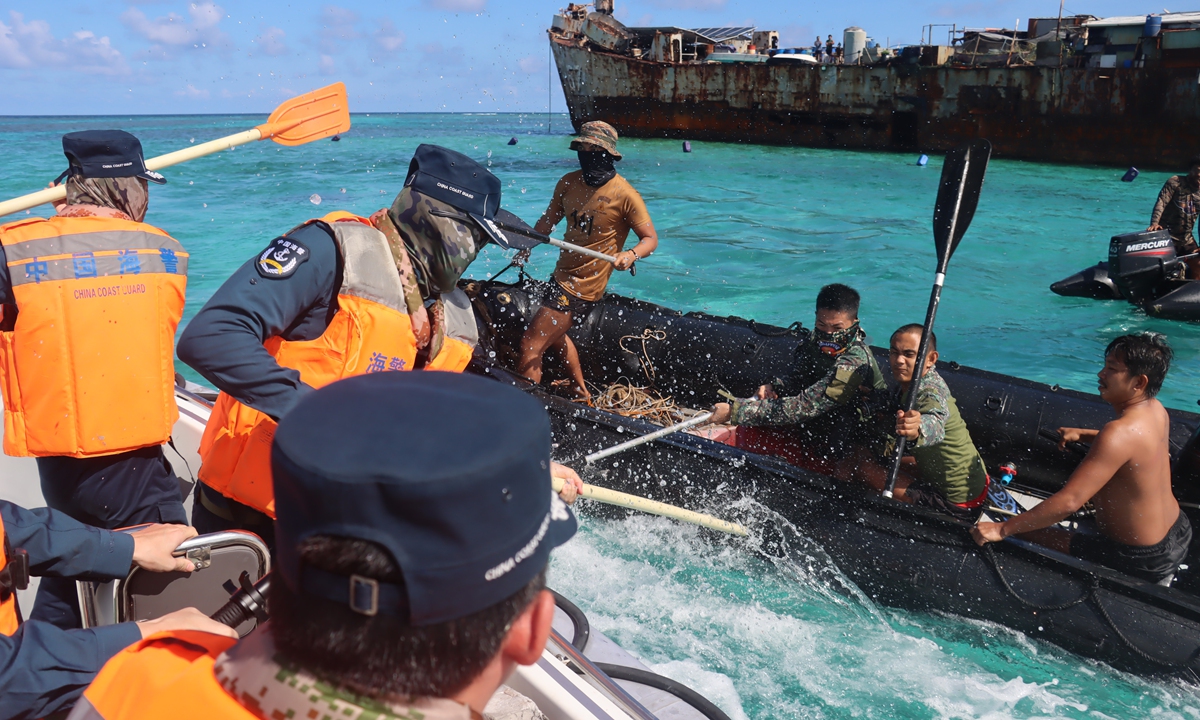
The recent standoff between the Philippines and China over the Ren'ai Jiao (Second Thomas Shoal) has intensified, with both sides issuing stern statements. According to the Chinese Foreign Ministry, China's maritime law enforcement activities near Ren'ai Jiao are described as legitimate, as they consider this area part of China's Nansha Islands territory. The ministry accused the Philippines of illegal activities, including the use of two rubber boats to dangerously approach and collide with Chinese coast guard vessels, labeling these actions as provocations.
This incident is crucial for international markets and geopolitical stability in the Asia-Pacific region. The South China Sea is a significant maritime trade route, and disruptions can have global trade implications, affecting shipping costs and supply chain reliability. For policymakers in the US, EU, and other regions, this escalation underscores the need for strategic navigation of alliances and defense commitments in the region, particularly concerning the US's mutual defense treaty with the Philippines.
The situation has broader strategic implications, as it tests the boundaries of China's territorial claims and the international community's response to such assertions. For investors and businesses, the potential for heightened military tensions could impact regional economic stability and investment climates, particularly in Southeast Asian markets.
While the CCTV report echoes the Chinese Foreign Ministry's stance, it provides limited additional information beyond affirming China's strong protest and demand for the Philippines to cease provocations. This reflects a concerted media effort to present a unified narrative on this sensitive territorial issue.
China's Maritime Patrols: Humanitarian Gesture or Strategic Move?
Recent developments in the South China Sea highlight China's strategic maneuvers under the guise of humanitarian efforts. According to a report from Sina, the Chinese Coast Guard allowed the Philippines to transfer injured personnel from an illegal 'sit-in' on a reef in the disputed waters. This act was described as a humanitarian gesture, with the Chinese Coast Guard spokesperson, Jiang Lue, emphasizing the decision was made out of 'humanitarian considerations'. The Chinese authorities closely monitored the operation, ensuring it was conducted under their oversight. This approach underscores China's ongoing efforts to assert its sovereignty and maritime rights in the region.
Meanwhile, CCTV provided a similar account with limited additional details, focusing more on the procedural aspects and reiterating the protection of China's territorial claims and maritime interests. The brevity of the article suggests a deliberate emphasis on procedural legitimacy rather than the strategic implications.
For international markets and policymakers, these developments signal China's dual strategy of employing soft power while maintaining hardline territorial claims. This incident could influence regional security dynamics, impacting trade routes and prompting responses from the US and EU regarding their South China Sea policies. The broader implication is a potential recalibration of military and diplomatic strategies by other regional actors, as they navigate the delicate balance between acknowledging China's gestures and countering its territorial ambitions.
China's Strategic Push for Maritime Stability Amidst Rising Tensions with the Philippines
Recent statements from China underscore a strategic push for maritime stability, as highlighted by Xinhua News. China has called for accelerated political transition in maritime regions, emphasizing the need for legitimate and effective governance to break cycles of instability. This call comes as China faces rising tensions in the South China Sea, a region critical for global shipping lanes and rich in resources.
China's narrative, as reported by Xinhua, frames the situation as a need for inclusive dialogue and governance reform to restore order and development. The article stresses the importance of combating crime and ensuring the safety of civilians, particularly vulnerable groups, while adhering to international law. This approach suggests a diplomatic overture to international audiences, highlighting China's commitment to peaceful resolution and development, which could affect international markets by stabilizing a key trade route.
In contrast, the Global Times article presents a more confrontational account of recent interactions between Chinese and Philippine forces in the South China Sea. It accuses Philippine military personnel of deliberately provoking Chinese Coast Guard officers. This narrative is likely intended for a domestic audience, emphasizing China's resolve and sovereignty in the region. It serves as a reminder to international policymakers of the potential for military escalation, impacting regional security dynamics and prompting responses from the US and EU.
The differing tones between Xinhua and Global Times reflect China's multi-faceted strategy. While Xinhua's call for governance reform and international cooperation aims to reassure global investors and policymakers of China's peaceful intentions, the Global Times' focus on military provocations underscores the ongoing geopolitical tensions. These narratives highlight the delicate balance China seeks to maintain between diplomatic engagement and asserting its territorial claims.
For international readers, these developments are significant. Stability in the South China Sea is crucial for uninterrupted maritime trade, affecting global supply chains and economic policies. The situation also influences US and EU foreign policy, as they navigate support for regional allies like the Philippines while managing relations with China. As such, understanding China's dual approach helps international businesses and policymakers anticipate shifts in regional security and economic strategies.