
Japan's Election Shift; North Korea's Military Focus; China's AI Surge Reshape Global Dynamics
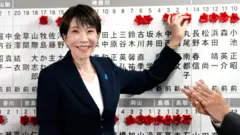
Japan's Election Outcome: Implications for Global Relations and Market Dynamics
The recent Japanese election, where Prime Minister Sanae Takaichi and her Liberal Democratic Party (LDP) achieved a landslide victory, has captured global attention. This victory, which saw the LDP securing over two-thirds of the seats in the House of Representatives, is significant both domestically and internationally.
The New York Times emphasizes Takaichi's strategic positioning and the internal dynamics within Japan that led to her success. The publication highlights how Takaichi's leadership might influence Japan's stance on regional security issues, particularly concerning China and Taiwan. For international markets, this could mean a more assertive Japan in regional security alliances, potentially affecting global supply chains and investment flows in Asia.
Liberty Times provides a critical perspective, focusing on the potential risks associated with Takaichi's victory. It warns of Japan becoming more confrontational regarding Taiwan, which could lead to strained Sino-Japanese relations and impact regional stability. This narrative suggests that international investors should brace for potential volatility in East Asia, which could affect global markets sensitive to geopolitical tensions.
The BBC underscores the historical significance of Takaichi as Japan's first female Prime Minister, noting the implications of her conservative policies on domestic and international fronts. The report highlights how her administration's approach to defense and constitutional reforms could reshape Japan's role in international security frameworks, influencing U.S. and EU policies towards Asia.
Sina focuses on the diplomatic aspect, particularly the strengthening of Japan-U.S. ties under Takaichi's leadership. This alliance is crucial for maintaining balance in the Asia-Pacific, impacting how other countries might align their policies concerning China.
Meanwhile, Liberty Times offers another angle, discussing China's alleged interference and the perception of its influence as a 'super campaigner' for Takaichi. This highlights the broader geopolitical chess game between China and Japan, with implications for global trade policies and economic sanctions.
Lastly, Xinhua briefly mentions Thailand's political developments, which though unrelated to Japan, underscore the broader regional shifts that could affect international business strategies and diplomatic relations across Asia.
These articles collectively illustrate a complex geopolitical landscape where Japan's election results are more than a domestic affair. The implications for international markets, U.S.-China relations, and regional security strategies make this a critical development for global stakeholders to monitor closely.
North Korea's Military Anniversary Highlights Strategic Shifts with Global Implications
Recent reports from Xinhua and CCTV highlight the celebration of the 78th anniversary of the founding of the North Korean People's Army. The coverage focuses on Kim Jong-un's inspection of the Ministry of National Defense and his encouragement of the military. Both sources emphasize the past year's achievements and the deepening trust between the military and the North Korean leadership. Kim's rhetoric suggests a strategic shift towards expanding and reforming the military, indicating a more assertive military posture in the coming years.
These developments indicate heightened military focus within North Korea, which may lead to increased tensions on the Korean Peninsula. For international markets and investors, this could mean renewed volatility in the region, affecting trade routes and supply chains. The strategic shift could also prompt a reassessment of defense policies in the US, South Korea, and Japan, potentially leading to increased military spending and regional arms build-up.
For the US and EU, understanding North Korea's military intentions is crucial for formulating diplomatic and economic strategies. The broader strategic implications include a potential recalibration of alliances and security frameworks in East Asia, as regional players respond to North Korea's military ambitions.
The focus on military expansion and reform underscores North Korea's intent to strengthen its position in regional geopolitics. This development is significant for international readers as it highlights the continuing challenges of achieving stability and peace in the region, with implications for global security and economic partnerships.
South Korean Political Merger Talks Highlight Regional Political Fragmentation and Challenges
Recent reports from Xinhua and CCTV reveal ongoing tensions within South Korea's ruling Democratic Party regarding a potential merger with the minor opposition party, the Patriotic Revolutionary Party. This internal strife has stalled the merger process, reflecting broader challenges in South Korean political consolidation.
Both sources report that the proposal for a merger was initiated by the Democratic Party's leader, Jeong Cheol-rae, who emphasized shared values and a history of collaboration against former President Yoon Seok-youl. The merger aims to strengthen the parties' positions ahead of regional elections in June and the 2024 general elections. However, opposition within the Democratic Party is strong, with some members accusing Jeong and the Patriotic Revolutionary Party's leader, Cho Guk, of being overly ambitious for power.
The articles also highlight a looming deadline set by Cho Guk for the Democratic Party to decide on the merger by February 13, failing which the Patriotic Revolutionary Party would abandon the idea. This ultimatum underscores the precarious nature of political alliances in South Korea and the potential for further fragmentation if the merger does not proceed.
For international markets and investors, this development signals potential instability in South Korea's political landscape, which could impact economic policies and investor confidence. The internal discord within South Korea's ruling party could lead to shifts in domestic and foreign policies, affecting trade relationships and regional security dynamics, particularly in the context of North Korea's actions and US-South Korea relations.
For the US and the EU, the situation in South Korea may necessitate recalibrating diplomatic engagements and economic partnerships, considering the potential for policy changes and the impact on regional security alliances. As South Korea navigates these political challenges, international stakeholders should remain vigilant to the implications for regional stability and economic policies.
AI-Powered Entrepreneurship in China: A Catalyst for Global Innovation
The rapid evolution of AI technologies in China is reshaping the entrepreneurial landscape, as highlighted by Xinhua's extensive coverage on the rise of 'one-person companies' (OPCs) and the burgeoning AI user base. This development, centered on the concept of 'super individuals' leveraging AI ecosystems to foster innovation, is transforming how entrepreneurship is perceived and executed in China.
According to Xinhua's report titled 'From Solo Fight to Ecosystem Coexistence: AI Communities Reshape Entrepreneurship', AI technologies are significantly reducing barriers for individual entrepreneurs. The emergence of OPCs allows individuals to efficiently operate businesses using AI tools for content creation, product management, and service delivery. This shift from traditional entrepreneurship models, which required substantial investment in teams and resources, to a more democratized form of innovation, highlights AI's potential to drive economic growth.
The strategic construction of AI communities, such as the AI North Latitude Community in Zhongguancun, is pivotal. These hubs offer comprehensive support, from providing affordable office spaces to facilitating AI tool access, thereby enabling OPCs to thrive. This ecosystem approach not only nurtures local talents but also serves as a model for other regions globally, showcasing how AI can be harnessed to spur entrepreneurship and innovation.
Complementing this, another Xinhua article, '6 Billion Users Drive the Foundation for the AI+ Market', underscores the scale of AI adoption in China. The report indicates a massive user base of 6.02 billion for generative AI, with a penetration rate of 42.8%. This widespread adoption is attributed to policy support, market demand, and technological advancements, creating a robust foundation for AI-driven societal transformation.
These developments hold significant global implications. For international markets and investors, China's AI-driven entrepreneurial model offers insights into potential investment opportunities and partnership avenues. The OPC model could inspire similar initiatives worldwide, prompting a reevaluation of startup ecosystems in the US, EU, and beyond. Additionally, as China's AI capabilities grow, this could influence global tech competition, prompting other regions to expedite their AI policy frameworks and innovation strategies.
For policymakers, understanding China's approach to integrating AI into entrepreneurship and its societal impact could inform strategic decisions regarding AI governance and economic planning. The emphasis on creating supportive ecosystems for startups highlights the importance of infrastructure and policy alignment in fostering innovation.
In summary, China's integration of AI into its entrepreneurial fabric is not just a domestic phenomenon but a catalyst for global innovation. As AI technologies continue to evolve, their role in reshaping industries and economies will become increasingly prominent, underscoring the need for international stakeholders to engage with and learn from these developments.
South Korean Military Helicopter Crash Raises Concerns Over Regional Defense Readiness
Recent reports from both Sina and CCTV detail an incident involving a South Korean military helicopter crash in Gyeonggi Province, resulting in serious injuries to two individuals onboard. Both sources provide similar accounts of the event, primarily focusing on the immediate details of the crash and its location.
The occurrence underscores significant implications for international defense readiness and regional security dynamics. For global markets and businesses, such incidents can signal potential vulnerabilities in military equipment and preparedness, which might influence defense contracts and investments, particularly those involving South Korean military procurements. The crash could prompt a re-evaluation of existing defense strategies and equipment reliability, affecting companies involved in defense manufacturing and maintenance.
From a policy perspective, the incident may lead to increased scrutiny by the U.S. and EU on their military alliances and defense collaborations with South Korea. For international readers, the crash highlights the importance of maintaining effective military capabilities, especially in strategically sensitive regions like the Korean Peninsula. It also raises questions about the readiness of South Korean forces in the context of ongoing regional tensions, particularly with North Korea.
Overall, while the reports from Sina and CCTV are straightforward, they serve as a reminder of the broader strategic implications of military incidents and the ripple effects they can have on international defense and economic landscapes.
Xi Jinping's Beijing Tech Innovation Tour: Global Implications for Technology and Investment
Chinese President Xi Jinping's recent visit to the Beijing National Information Technology Innovation Park underscores China's strategic emphasis on technological advancement and innovation. According to CCTV, Xi's tour focused on understanding the applications of information technology and Beijing's efforts to accelerate the construction of an international science and technology innovation center. His interactions with scientists and technology enterprise representatives highlight China's commitment to bolstering its technological capabilities.
This development has significant global implications. For international markets and investors, it signals China's continued prioritization of tech innovation, potentially opening avenues for investment in Chinese tech firms and collaborations in research and development. For the US and EU, China's advancements in technology could spur competitive pressures, influencing their own tech policies and innovation strategies.
Furthermore, this move highlights China's ambition to not only enhance domestic tech capabilities but also to assert itself as a global leader in technology. This could lead to increased competition in sectors like artificial intelligence, semiconductors, and green technology, impacting global supply chains and international tech standards.
Overall, Xi's visit and China's focus on tech innovation are critical for international readers to understand, as they shape the future landscape of global technology, economic competition, and geopolitical dynamics.