
US-China Relations Strain; Global Security and Trade Disrupted Amid Nuclear Allegations, Tariff Revisions, and Infrastructure Challenges
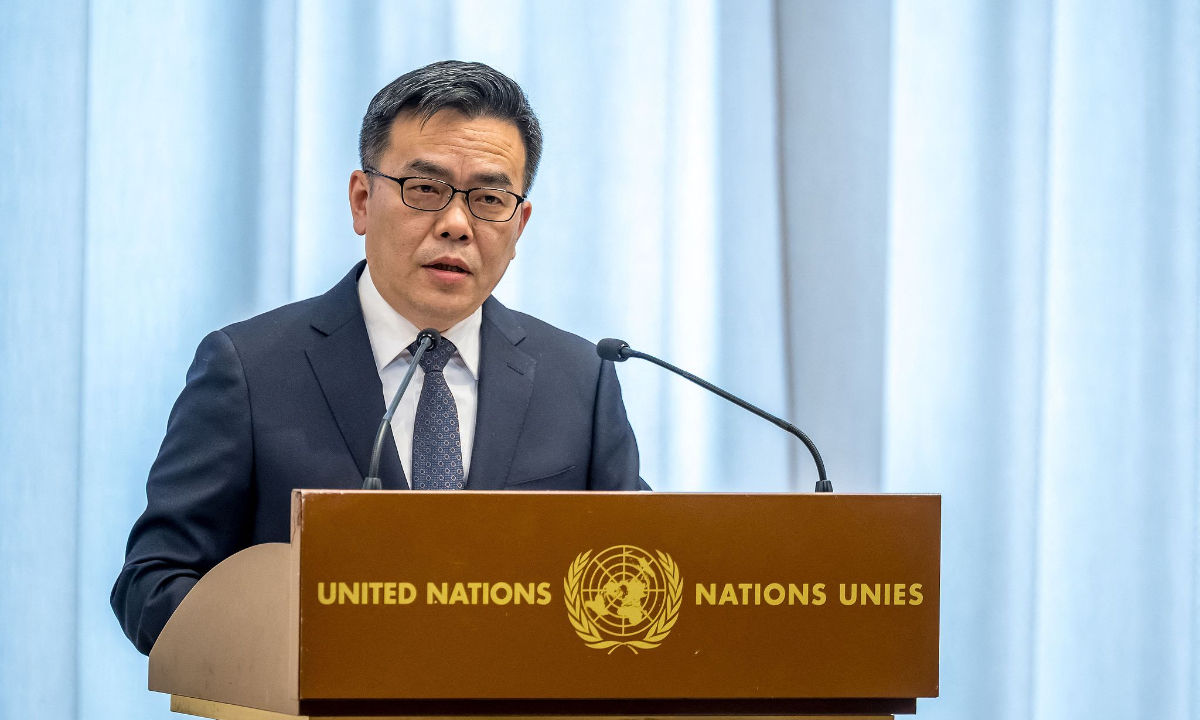
China Rejects US Nuclear Test Allegations Amid Global Security Concerns
In a series of articles from Global Times, Xinhua, CCTV, and Sina, China's diplomatic response to US allegations of nuclear testing has been a focal point of discussion. China’s ambassador to the UN, Shen Jian, firmly denied the US accusations, labeling them as unfounded and suggesting they serve as a pretext for the US to resume its own nuclear tests.
The Global Times article highlights China's commitment to international disarmament treaties and emphasizes the groundlessness of the US claims. Li Song, China's permanent representative at the UN Conference on Disarmament, reiterated China's dedication to maintaining global strategic stability through arms control.
Xinhua and CCTV both underscore China’s stance on promoting fair, cooperative, balanced, and effective arms control. They stress that China supports the Comprehensive Nuclear-Test-Ban Treaty (CTBT) and calls for the US to renew its commitment to a moratorium on nuclear testing. This narrative aligns with China’s broader diplomatic objectives of enhancing global security cooperation and governance.
Sina mirrors this position, focusing on Shen Jian's remarks about the importance of adhering to international law and multilateral arms control mechanisms. The article reiterates China’s appeal for the US to uphold the international consensus against nuclear testing.
These developments highlight a significant geopolitical tension point, impacting international security dynamics. For global markets and investors, the rhetoric around nuclear testing may influence defense and technology sectors, particularly those involved in arms control and surveillance technologies. For US and EU policymakers, the situation underscores the importance of diplomatic engagement and the potential need for renewed negotiations on nuclear arms control. Additionally, readers outside China should be aware of the broader implications for global strategic stability and the potential ripple effects on international security policies.
Implications of US Tariff Revisions Under Section 232 for Global Trade
The recent discussions around the potential introduction of new tariffs by the Trump administration under Section 232 of the Trade Expansion Act have significant international implications, as outlined in several reports. Liberty Times highlights that the proposed tariffs would target six major industries, including large batteries and telecommunications equipment, emphasizing national security concerns. This move could potentially disrupt international supply chains, affecting industries globally that rely on these products.
Meanwhile, Sina reports on the U.S. Supreme Court's decision deeming previous large-scale tariffs under the Trump administration as lacking clear legal authorization. Trump's response, threatening higher tariffs on countries perceived to exploit trade agreements, underscores a continuation of protectionist policies. Such rhetoric may strain diplomatic relations and impact ongoing trade negotiations with key partners like the EU and India.
Additionally, another article from Liberty Times confirms that despite these legal challenges, the U.S. government is committed to applying a 15% global tariff rate agreed upon with several countries. This consistency in policy, despite judicial setbacks, signals to international investors and businesses that the U.S. administration remains steadfast in its trade strategy, which could influence global market stability.
Collectively, these developments could lead to increased volatility in international markets as businesses and investors reassess their strategies in light of potential changes in U.S. trade policy. Moreover, they highlight the broader strategic implications for global trade relations, particularly as countries navigate the complexities of U.S. tariff policies and their impact on international agreements.
China's Regional Development Strategy and Its Global Implications
The recent focus on regional development strategies within China, as outlined in the article from Qiushi Journal, highlights a significant shift in the country's economic policy. The emphasis on regional coordination as a means to achieve high-quality development aligns with Xi Jinping's economic thought, which seeks to address imbalances and promote sustainable growth. This development strategy is not only pivotal for China's domestic agenda but also carries substantial international implications.
China's push for regional economic coordination aims to optimize the spatial distribution of production capacity and strengthen the integration of urban and rural areas. This approach is expected to enhance China's economic resilience and competitiveness on the global stage by fostering innovation and reducing regional disparities. For international markets, businesses, and investors, this means potential opportunities for collaboration in sectors prioritized by China's regional strategies, such as technology and infrastructure development.
The Global Times article, while not directly related to the regional development theme, provides a glimpse into China's diplomatic engagements, particularly through the participation of Chinese Foreign Minister Wang Yi at the United Nations Human Rights Council. This involvement underscores China's growing assertiveness in international forums and its intention to project soft power, which complements its economic strategies. The international community, including the US and EU, must consider how China's diplomatic maneuvers, combined with its economic policies, could influence global governance structures and geopolitical alliances.
Meanwhile, the Liberty Times article about Xi Jinping's congratulatory message to North Korean leader Kim Jong-un highlights China's strategic relationships in the region. The strengthening of ties between China and North Korea could impact regional stability and influence the strategic calculus of countries like the US and South Korea. The deepening of Sino-North Korean relations may also affect the broader dynamics of US-China relations, especially in the context of security and economic interests in the Asia-Pacific region.
In conclusion, China's regional development strategies, as well as its diplomatic engagements, have far-reaching implications for international markets and geopolitical dynamics. As China continues to implement high-quality development initiatives, global stakeholders must closely monitor these developments to assess potential impacts on trade, investment, and international relations.
Escalating Violence in Mexico: Implications for Global Security and Markets
Recent reports from Xinhua News and Liberty Times highlight a surge in violence in Mexico following the death of a key cartel leader. The Mexican government’s crackdown on the CJNG cartel leader, Nemesio Oseguera Cervantes, has triggered retaliatory attacks across the country. Xinhua reports that these attacks have resulted in the deaths of 27 security personnel, while Liberty Times states that the total death toll has exceeded 70, including civilians and law enforcement officers.
This escalation in violence poses significant challenges for international markets and global security. The disruption in Mexico, a major hub for global supply chains, could lead to increased volatility in markets reliant on Mexican exports, particularly in the automotive and manufacturing sectors. For businesses and investors, the instability underscores the importance of assessing geopolitical risks in supply chain management.
The situation also has implications for U.S. and EU policies. As violence spills over into regions with American and European interests, there may be increased pressure on these governments to support Mexico in combating drug cartels. This could result in heightened security cooperation or economic aid aimed at stabilizing the region.
International readers should be concerned about the broader strategic implications of this violence. As cartels grow bolder, the potential for cross-border crime and trafficking increases, affecting global security. Additionally, the instability could deter foreign investment in Mexico, impacting economic growth and regional development.
While both Xinhua and Liberty Times provide detailed accounts of the violence, their narratives differ slightly in emphasis. Xinhua focuses on the immediate impact on security forces, whereas Liberty Times provides a broader overview of the national unrest. This difference in perspective may reflect each publication's audience priorities, with Xinhua catering to a more security-focused readership and Liberty Times addressing broader socio-political concerns.
Severe Snowstorms in Northeast US Disrupt Power and Travel, Highlighting Infrastructure Vulnerabilities
A recent series of severe snowstorms has significantly impacted the northeastern United States, particularly affecting New York City and its surrounding areas. According to CCTV, the snowstorm transformed New York City into a 'City of Isolation' with transportation systems shut down and a travel ban implemented. The National Weather Service predicted snowfall could exceed 51 centimeters, marking one of the city's top ten snowstorms in history.
Furthermore, CCTV reported that nearly 400,000 users in the northeastern US experienced power outages due to the weight of the snow and strong winds causing widespread electricity disruptions. This underscores the vulnerability of infrastructure in handling extreme weather conditions.
These events have broader implications beyond the immediate region. For international markets and businesses, the disruption in one of the world's major financial hubs could lead to temporary economic slowdowns and affect global supply chains. The increased demand for natural gas due to cold weather conditions has already caused a spike in futures prices, which could have ripple effects on energy markets globally.
For policymakers in the US and EU, the snowstorm highlights the importance of investing in resilient infrastructure to withstand extreme weather events. As climate change continues to increase the frequency and intensity of such events, there is a growing need for robust disaster preparedness and response strategies.
International readers should note that such disruptions in major global cities can have cascading effects on global trade and investment flows. The situation serves as a reminder of the interconnectedness of global infrastructure and the need for international cooperation in climate adaptation and infrastructure resilience.
US-China Relations Strain as Xinjiang Allegations and Immigration Issues Unfold
Recent developments concerning China’s Xinjiang policies and the broader implications for international relations have been highlighted in two key articles. The first, from the BBC, focuses on the personal journey of a Chinese national, Guan Huang, who fled to the United States after documenting Xinjiang's re-education camps. His story underscores the human rights concerns and political tensions surrounding China's treatment of ethnic minorities in Xinjiang. The BBC article emphasizes the international human rights perspective, suggesting that Guan’s experiences and asylum in the US highlight the ongoing global scrutiny and diplomatic challenges China faces over its domestic policies.
Guan's account of his escape and subsequent asylum application in the US is detailed, illustrating the personal risks and international legal processes involved. This narrative not only sheds light on individual experiences but also serves as a broader commentary on the geopolitical tensions between China and Western nations, particularly the US. The implications for international markets and policy are significant, as such human rights issues often influence diplomatic stances, affect trade negotiations, and can lead to sanctions or other economic repercussions.
In contrast, an article from Sina offers a different perspective by reporting on China's national security concerns regarding Chinese citizens being manipulated by anti-China organizations abroad. This article details how individuals, like the fictional Li, are allegedly deceived into participating in anti-China activities under the guise of obtaining foreign residency. The narrative presented by Sina reflects China's stance on safeguarding national security and portrays these individuals as victims of foreign manipulation. This can be seen as an effort to counteract international criticism by highlighting threats to China's sovereignty and the integrity of its citizens.
The contrasting narratives between the BBC and Sina highlight the complex interplay of media portrayals in shaping international perceptions and policies. While the BBC focuses on human rights and individual freedoms, Sina emphasizes national security and the risks of foreign influence. For international readers, these stories underline the importance of understanding the diverse perspectives influencing US-China relations. The global implications are profound, as these narratives contribute to shaping policies on immigration, human rights advocacy, and international diplomacy.
Overall, these developments indicate a deepening of the geopolitical rift between China and Western countries, impacting international markets, influencing policy decisions in the US and EU, and affecting global business operations dependent on stable Sino-Western relations. Investors and policymakers must consider these narratives' potential to alter the geopolitical landscape, affecting everything from trade agreements to technological collaborations.
US-Iran Tensions Escalate Amid Diplomatic Talks and Military Maneuvers
In a rapidly evolving geopolitical landscape, recent developments between the United States and Iran underscore the intricate dance of diplomacy and military posturing. According to a report from Sina, the U.S. and Iran are set to engage in a new round of talks on February 26 in Switzerland. This diplomatic effort is juxtaposed with heightened American military activities, including the deployment of the USS Gerald R. Ford aircraft carrier to the Eastern Mediterranean and increased aerial operations in the region.
The Liberty Times adds another layer to this narrative by highlighting the U.S. decision to withdraw non-essential personnel from its embassy in Beirut, citing security concerns in Lebanon's capital. This move has sparked international attention and is seen as a potential indicator of military action, particularly against Iran, should diplomatic talks falter.
The articles from both Sina and Liberty Times suggest an underlying tension within the U.S. administration regarding the potential for military conflict. Sina reports internal divisions among U.S. decision-makers, with some advocating for military strikes against Iran, while others caution against the risks of prolonged conflict. This internal debate reflects the complexity of U.S. foreign policy decision-making and its global implications.
For international markets, these developments could lead to increased volatility, particularly in oil prices, given Iran's significant role in global energy supplies. Businesses and investors should be prepared for potential disruptions in supply chains and fluctuations in commodity markets.
From a policy perspective, the EU and other regional actors might find themselves navigating a delicate balance between supporting diplomatic efforts and preparing for potential escalation. The strategic implications of U.S.-Iran tensions extend beyond the Middle East, affecting global alliances and the international security landscape.
For readers outside China, understanding these dynamics is crucial, as they impact global economic stability and international relations. The potential for a military conflict involving Iran could have far-reaching consequences, influencing everything from energy markets to geopolitical alliances.
China's Expanding High-Speed Rail and Green Charging Networks: A Global Perspective
Recent developments in China's transportation infrastructure highlight the country's strategic focus on connectivity and sustainable energy, with significant implications for international markets and policy frameworks. Two distinct narratives have emerged from Chinese publications, each shedding light on different facets of this broad theme.
According to Qiushi Journal, China's high-speed rail (HSR) network is rapidly expanding, with the Wuhan railway station serving as a central hub connecting over 100 cities nationwide. This network not only facilitates domestic travel but also positions Wuhan as a critical economic corridor linking China to 41 countries through 62 cross-border routes. The piece underscores China's vision of 'interconnectivity' and its tangible impacts on local economies, as seen in the transformation of regions like East Africa, where Chinese-built railways are perceived as pathways to prosperity. For international markets, this expansion could mean increased trade opportunities and a more integrated global supply chain, potentially influencing logistical strategies and foreign investment flows.
Meanwhile, Sina News focuses on the burgeoning network of electric vehicle (EV) charging stations across Jiangsu Province during the Spring Festival. The article details the province's efforts to accommodate a surge in green travel, with a 63.05% increase in EV charging sessions compared to the previous year. This growth is supported by a robust infrastructure capable of fast-charging multiple vehicles simultaneously, enhanced by AI systems for remote maintenance and operation. For global audiences, China's advancements in EV infrastructure signal a shift towards sustainable transportation, influencing global automotive markets and encouraging similar green initiatives in other countries. The integration of AI in managing these networks also showcases China's technological prowess, potentially setting new standards for smart city developments worldwide.
Both articles reflect China's strategic ambitions but from different angles. Qiushi Journal emphasizes the symbolic and economic power of connectivity, while Sina News highlights practical advancements in sustainable infrastructure. For the US, EU, and other regions, these developments in China could impact policy decisions regarding trade, environmental standards, and technological collaboration. As China continues to weave its 'net' of connectivity and sustainability, international stakeholders must consider the broader implications on global economic dynamics and technological innovation.
US Military Strikes Alleged Drug Trafficking Vessel: Global Implications for Security and Trade
Two recent articles from CCTV and Liberty Times highlight a significant US military operation targeting a suspected drug trafficking vessel in the Caribbean. On February 23rd, the US Southern Command confirmed an airstrike on a ship allegedly involved in drug smuggling, resulting in the deaths of three individuals. This operation underscores ongoing US efforts to curb illicit drug trade routes in the region.
CCTV's coverage emphasizes the US military's assertion that the vessel was engaged in activities orchestrated by a terrorist organization. By framing the operation within the context of counter-terrorism, CCTV aligns with China's broader narrative of supporting international anti-terrorism efforts. This portrayal could be interpreted as a subtle nod towards China's own domestic anti-terrorism policies, potentially seeking to draw parallels between US and Chinese security strategies.
In contrast, Liberty Times focuses on the operational details and the broader context of US military actions in the Caribbean and Eastern Pacific regions. Notably, the article highlights the frequency of such operations, citing 44 airstrikes since September 2023 that have targeted drug trafficking activities. Liberty Times' reporting may reflect Taiwan's interest in US military activities, given Taiwan's strategic partnership with the United States.
The implications of these developments are multifaceted. For international security, the operation signals the US's ongoing commitment to combating drug trafficking, which has significant ramifications for global trade and regional stability. The Caribbean's role as a transit point for illicit drugs impacts not only the US but also European and Asian markets, making this a global concern.
From a policy perspective, these actions may influence US relations with Latin American countries, potentially affecting trade agreements and diplomatic ties. The operation could also serve as a precedent for future military interventions in similar contexts, raising questions about sovereignty and international law.
For businesses and investors, the disruption of drug trafficking routes could impact the illegal drug market, with potential economic ripple effects in industries indirectly linked to the drug trade. Moreover, increased US military presence in the region could affect shipping routes and logistics, influencing global supply chains.
Overall, the US military's strike on a suspected drug trafficking vessel highlights the interconnectedness of global security, trade, and diplomacy. It serves as a reminder of the complex challenges posed by transnational crime and the need for coordinated international responses.