
Venezuela Extradites Maduro's Ally; China-Russia Ties Deepen; Ebola Declared Global Emergency; Taiwan Tensions Persist
Venezuela's Extradition of Maduro's Ally to the US: Global Ramifications and Strategic Implications
Recent developments in Venezuela have captured international attention as the government announced the extradition of Alex Saab, a businessman with close ties to President Nicolás Maduro, to the United States. This move is part of a broader legal and diplomatic saga involving allegations of money laundering and other criminal activities conducted by Saab on American soil.
Xinhua reports that Venezuela's decision was executed in accordance with its immigration laws, aiming to facilitate Saab's legal accountability in the US. The article highlights the procedural adherence to Venezuelan law, framing the extradition as a lawful process rather than a politically motivated action.
In contrast, Sina provides a more detailed narrative, mentioning that Saab's extradition follows a complex history of legal entanglements, including previous detentions and negotiations between the US and Venezuela. This outlet underscores the strategic implications, noting that Saab's case has been a point of contention in US-Venezuelan relations, with potential impacts on diplomatic negotiations and sanctions.
The CCTV article offers limited information but serves to reinforce the narrative of legal compliance by Venezuela, without delving into the geopolitical ramifications.
These developments indicate a significant turning point in US-Venezuelan relations, with Saab's extradition potentially influencing future diplomatic engagements. For international markets, businesses, and investors, this situation underscores the volatility in regions where US legal actions intersect with local governance and geopolitical interests. The US's pursuit of Saab reflects its broader strategy to exert pressure on Maduro's regime, which may lead to shifts in Venezuelan policy or affect regional alliances.
For US and EU policymakers, the extradition highlights the importance of legal and diplomatic tools in addressing international crime and corruption. It also raises questions about the balance of power and influence in Latin America, where geopolitical competition with China and Russia is intensifying. Readers outside China should care about this development as it exemplifies the complex interplay between law, diplomacy, and international relations, with potential ripple effects on global stability and economic policies.
China and Russia Strengthen Ties Amid Global Geopolitical Shifts
Recent developments underscore the deepening relationship between China and Russia, as highlighted in their interactions during the 10th China-Russia Expo. According to Xinhua, both nations celebrated the 30th anniversary of their strategic partnership, with Chinese President Xi Jinping and Russian President Vladimir Putin exchanging congratulatory messages. The expo, themed "Trust, Cooperation, Win-Win," was marked as a significant platform for bilateral dialogue, focusing on economic and social development collaborations.
This strengthening of ties has several implications for international markets and geopolitical dynamics. The emphasis on comprehensive cooperation across various sectors suggests an intent to counterbalance Western influence, particularly in high-tech and industrial domains. For international businesses and investors, this could mean increased competition in these sectors and a potential shift in supply chain dynamics as China and Russia enhance their economic interconnectivity.
Meanwhile, Sina reports on the upcoming state visit of President Putin to China, set for May 19-20. Discussions are expected to cover bilateral relations and international affairs, highlighting the broad scope of their partnership. This visit reinforces the narrative of a united front against Western geopolitical strategies, particularly those of the United States and European Union, which have imposed sanctions on Russia and are wary of China's growing global influence.
For the US and EU, these developments could necessitate reevaluation of their foreign policies towards both Russia and China. The Sino-Russian alliance poses a strategic challenge, suggesting that Western powers may need to reassess their diplomatic and economic strategies in response to this evolving geopolitical landscape.
Overall, the enhanced Sino-Russian cooperation serves as a reminder to international readers of the shifting global power dynamics and the need to stay informed about how these alliances could impact global markets and international relations.
WHO Declares Ebola Outbreak in Africa as an International Health Emergency: Global Implications
The World Health Organization (WHO) has declared the recent Ebola outbreak in the Democratic Republic of the Congo (DRC) and Uganda as a 'Public Health Emergency of International Concern' (PHEIC). This decision underscores the severity of the outbreak, attributed to the Bundibugyo ebolavirus, and its potential global ramifications. The World Journal reports that the outbreak has resulted in cross-border transmission and mysterious deaths, with the WHO recommending countries to activate emergency systems and implement border screenings. This level of alert, not reached since the 2024 monkeypox outbreak, highlights the virus's threat beyond Africa.
The Liberty Times provides additional context, noting that the outbreak has already claimed 80 lives in the DRC and infected individuals have been identified in Uganda. The situation's complexity is exacerbated by high transmission rates and the lack of approved vaccines or treatments for this specific strain. The WHO's decision is a call for immediate international attention, urging nations to bolster their public health responses and prepare for potential cases.
For international markets and investors, this development signals potential disruptions in trade with affected regions, particularly in sectors reliant on African commodities. The outbreak could also impact global supply chains if containment measures disrupt transportation and logistics. Policymakers in the US, EU, and other regions should be vigilant, considering the implications for health security and the need for coordinated international assistance.
Globally, this situation highlights the importance of strengthening healthcare infrastructures and international collaborations to prevent the spread of infectious diseases. The outbreak serves as a stark reminder of the interconnected nature of global health, necessitating a unified response to mitigate the risks posed by such epidemics.
Understanding Hypertension Management: A Deep Dive into Chinese Health Guidelines
The recent articles from CCTV highlight critical aspects of hypertension management, focusing on medication and dietary adjustments. These pieces provide valuable insights into China's public health strategies, emphasizing the importance of avoiding common medication errors and adopting dietary changes to manage high blood pressure effectively.
Both articles underscore the significance of precise medication usage and dietary regulation, which are essential components of China's broader health initiative to combat chronic diseases. The articles stress the necessity of avoiding specific mistakes when taking hypertension medication and advocate for a dietary approach encapsulated in the "one decrease, one increase" strategy, which involves reducing sodium intake while increasing the consumption of fruits and vegetables.
While the articles primarily target a domestic audience, their implications extend beyond China's borders. The focus on managing hypertension reflects global health trends, where chronic diseases pose significant challenges to healthcare systems worldwide. For international markets, businesses, and investors, understanding China's health policies can offer insights into potential areas for collaboration or investment in the healthcare sector, particularly in pharmaceuticals and health technology.
For policymakers in the US, EU, and other regions, these developments in China could inform their own public health strategies, especially in addressing the rising prevalence of lifestyle-related diseases. The emphasis on dietary adjustments and medication compliance aligns with global health guidelines, suggesting a convergence of health priorities across different regions.
Overall, these articles from CCTV provide a window into China's approach to public health, with lessons that are applicable on a global scale. By focusing on prevention and effective management of hypertension, there is potential for shared learning and cooperation in tackling one of the world's most pressing health issues.
USS Ford Carrier Returns to US After Record Deployment: Strategic Implications for Global Military Dynamics
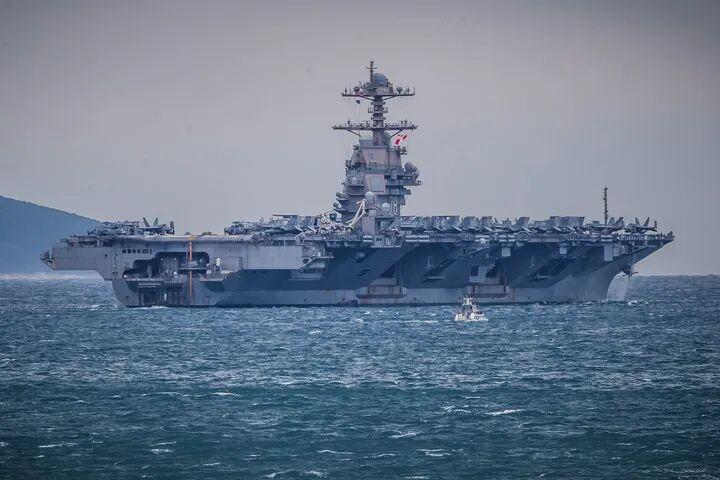
On May 16, the USS Gerald R. Ford aircraft carrier returned to its base in Norfolk, Virginia, concluding an 11-month deployment. According to a report by Sina, this marks the longest deployment for a U.S. aircraft carrier since the Vietnam War, lasting 326 days. During this period, the carrier participated in military operations concerning Venezuela and Iran, highlighting its strategic role in U.S. military posturing in key geopolitical hotspots.
This extended deployment not only underscores the logistical and operational challenges faced by U.S. naval forces, including crew fatigue and mechanical issues, but also reflects the broader strategic shifts in U.S. military focus. The carrier's involvement in operations against Venezuela and Iran suggests a continued emphasis on projecting power in regions critical to U.S. interests, which may influence international perceptions of U.S. military capabilities and readiness.
Internationally, this development could affect global military dynamics and alliance structures. For instance, the prolonged deployment and operational strain may prompt discussions within NATO and other U.S.-aligned military coalitions about shared responsibilities and resource allocation. Additionally, the focus on regions like the Middle East and Latin America may impact U.S. military commitments in the Asia-Pacific, potentially altering the strategic calculations of regional powers, including China.
Furthermore, the carrier's return comes amidst a backdrop of increasing geopolitical tensions, where military readiness and strategic deterrence are crucial. This narrative, as presented by Sina Finance, emphasizes the operational challenges faced by the U.S. Navy, such as the need for system maintenance and repairs following incidents like the March fire in the ship's laundry room, which injured several sailors. These details highlight the human and technical costs of maintaining a forward-deployed military presence.
For international stakeholders, including businesses and investors, the carrier's deployment and subsequent return underscore the importance of understanding military movements as indicators of broader geopolitical strategies. Such developments may influence global market stability, particularly in sectors like defense contracting and energy, where geopolitical tensions have direct economic implications.
US-China-Taiwan Relations: Strategic Ambiguity and Global Implications
Recent discussions following the Trump-Xi summit have highlighted the strategic maneuvers concerning Taiwan, a pivotal issue in US-China relations. According to Liberty Times, Beijing is attempting to establish Taiwan as a core framework in future US-China interactions. This strategy is being perceived as an effort to create a 'decent peace'—a fragile yet sustainable ceasefire-like state, as described by Max Bergmann from the Center for Strategic and International Studies (CSIS). The analysis suggests that while the summit lacked major breakthroughs, it aimed to stabilize tensions and prevent escalation.
Conversely, another report from Liberty Times critiques Trump's statements on Taiwan, labeling them as mere 'rhetoric.' Wang Dan, a Chinese dissident, argues that Trump's comments about not supporting Taiwan's independence are superficial, given Taiwan's established sovereignty and lack of formal independence declarations. This perspective underscores the complexity of US foreign policy, which continues to maintain the status quo without significant shifts.
These developments indicate a broader strategic aim by Beijing to solidify its influence over Taiwan within the US-China bilateral framework. For international markets and investors, the ongoing tension around Taiwan is a critical risk factor, influencing supply chains and regional stability. The EU and the US might need to recalibrate their policies to address the implications of a more assertive China, especially in technology and defense sectors. For global readers, understanding these dynamics is crucial as they shape geopolitical stability and economic trends.
The news highlights the delicate balance the US must maintain in its Taiwan policy, emphasizing strategic ambiguity to avoid direct confrontation with China. This nuanced approach affects global diplomatic relations, as other countries may need to navigate their alliances and trade agreements with both superpowers carefully. In summary, these articles provide insight into the complex interplay of diplomacy, strategy, and rhetoric that defines the current state of US-China-Taiwan relations, with significant implications for global politics and economics.
China's Urban 'Micro-Transformation' and Its Global Environmental Impact
Recent reports from CCTV highlight China's urban 'micro-transformation' initiatives aimed at incorporating more green spaces into city planning. These efforts focus on reducing the height of roadside barriers and enhancing pedestrian pathways, aiming to make urban environments more accessible and visually appealing.
These developments indicate a significant shift in China's approach to urban planning, emphasizing sustainability and environmental aesthetics. For international markets and investors, this signals potential growth in sectors related to urban development and green technologies. Companies involved in sustainable infrastructure and landscaping may find new opportunities in China's evolving urban landscape.
For policymakers in the US, EU, and other regions, China's focus on 'micro-transformation' could serve as a model for sustainable urban development, highlighting the importance of integrating environmental considerations into city planning. This approach aligns with global sustainability goals and could influence international policy discussions on urbanization and climate change.
While the articles from CCTV provide limited details, they underscore the Chinese government's commitment to improving urban living conditions, which could have broader implications for global environmental strategies. As China continues to prioritize green urban projects, it may contribute to international efforts to combat climate change, potentially affecting global climate policies and agreements.
Xi Jinping's Push for High-Quality Development in Philosophy and Social Sciences: Global Implications
The recent directive by Xi Jinping, as reported by Qiushi Journal, underscores China's intensified focus on advancing its philosophy and social sciences. Xi's emphasis on building a Chinese autonomous knowledge system aims to address China's, the world's, and the people's questions in the new era. This initiative is part of a broader strategy to integrate Chinese characteristics into socialism and accelerate the construction of a self-reliant philosophical and social sciences framework.
This development has significant global implications. By fostering a unique Chinese knowledge system, China aims to enhance its soft power and influence on the global stage, potentially challenging Western intellectual paradigms. For international markets and businesses, this move could signify China's growing confidence in promoting its ideological narratives, which may impact global cultural exchanges and international collaboration in academia. The emphasis on high-quality research outputs aligned with the Party's and the nation's strategic goals indicates a push towards intellectual self-reliance, which may influence how China engages with global issues and shapes international discourse.
The United States, the EU, and other regions should closely monitor this development, as it reflects China's broader ambition to assert its cultural and intellectual influence. This initiative may lead to shifts in global intellectual property dynamics and necessitate strategic adjustments in educational and cultural policies worldwide. For international readers, understanding this shift is crucial as it represents a strategic move by China to redefine its role and influence in global knowledge production and dissemination.