Arctic Strategy and Transatlantic Trade Tensions; Venezuela's US Visit Shakes Oil Markets; China's Governance Reforms Signal Global Impact
US-Denmark Negotiations on Greenland Sovereignty Avoid Tariffs, Highlight Strategic Arctic Interests
Recent developments surrounding Greenland's geopolitical status have captured international attention, with significant implications for US-European relations and Arctic strategy. A series of reports from Xinhua detail US President Trump's announcement that a framework agreement regarding Greenland has been established with Denmark's leadership, averting the imposition of tariffs on eight European nations initially planned for February 1st. This move is strategically significant as it underscores the United States' interest in the Arctic, where Greenland's geopolitical position is pivotal.
Xinhua's coverage emphasizes that Trump's decision to hold off on tariff impositions reflects ongoing discussions about US defense initiatives, such as the 'Golden Dome' missile defense system, which involves Greenland. The decision not to impose tariffs could strengthen transatlantic ties and foster cooperation in the Arctic region, which is increasingly seen as a zone of strategic competition against Russia and China.
Meanwhile, another Xinhua article shifts focus to US-Iran relations, where President Trump reiterated a firm stance against allowing Iran to develop nuclear weapons, linking broader US foreign policy objectives with its military presence in strategic regions.
In contrast, the narrative from Russian President Putin, as reported by Xinhua, distances Russia from the Greenland issue, suggesting that the US and Denmark independently manage the situation. This perspective highlights the diplomatic balancing act in the Arctic, where various powers assert influence without direct confrontation.
The Liberty Times adds another layer by discussing the historical context of territorial purchases, comparing Greenland to past US acquisitions like Alaska. This analogy serves to underline the potential economic and strategic value Greenland holds, not only for the US but for global geopolitics.
For international markets and investors, these developments imply a stabilized transatlantic trade environment, at least in the short term, as tariffs are set aside. For policymakers, particularly in the US and EU, the situation underscores the importance of Arctic strategy and the need for cohesive policies that address both environmental concerns and security interests. The broader implications suggest a continued focus on Arctic resources and strategic positioning, with Greenland at the heart of this geopolitical chessboard.
Trump's Criticism of Europe's Direction at Davos: Implications for Global Alliances and Markets
During the World Economic Forum in Davos, U.S. President Donald Trump criticized Europe's current trajectory, emphasizing that it is not moving in the right direction. This sentiment was echoed across multiple Chinese media outlets, including Xinhua and CCTV. Trump's remarks focused on Europe's policies regarding immigration and green energy, arguing that these areas have led to unfavorable changes.
Trump's speech highlighted his dissatisfaction with Europe's perceived lack of strong alliances, as he expressed a desire for a robust partnership rather than a weakened one. This narrative was consistently presented by both Xinhua and CCTV, with the former adding that Trump's comments were part of a broader critique of European policies, including a pointed reference to the historical context of the U.S. returning Greenland to Denmark post-World War II. Xinhua's analysis suggests that Trump's rhetoric may aim to pressure Europe into aligning more closely with U.S. interests, particularly in terms of strategic and security cooperation.
The implications of Trump's statements are significant for international markets and geopolitical alliances. For investors and businesses, this critique signals potential tensions in transatlantic relations, which could impact trade negotiations and economic partnerships. The emphasis on strengthening alliances could lead to shifts in defense spending and collaborative projects across NATO countries, affecting industries related to defense and security.
For U.S. and EU policymakers, Trump's speech serves as a reminder of the ongoing need to navigate complex relationships with a focus on mutual interests. It also underscores the importance of addressing internal policy disagreements to maintain a united front on global issues. For readers outside of China, understanding these dynamics is crucial as they shape the future of international cooperation and economic policies.
Overall, these developments indicate a period of reassessment for U.S.-Europe relations, with potential ripple effects on global strategies and market stability. As these narratives unfold, stakeholders worldwide should monitor how these critiques influence policy adjustments and international collaborations.
Venezuela's Interim President's US Visit: A Strategic Shift with Global Ramifications
Recent developments surrounding Venezuela's interim president, Delcy Rodriguez, visiting the United States highlight a significant geopolitical shift with implications for international markets and global politics. Liberty Times reports that Rodriguez's visit marks the first official visit to the US by a sitting Venezuelan leader in over a quarter of a century, signaling a potential thaw in US-Venezuelan relations. The backdrop of this visit is the recent capture of former Venezuelan President Nicolas Maduro by US forces, a move that has destabilized the region's political landscape.
According to World Journal, US President Donald Trump's administration appears willing to support Rodriguez, potentially opening avenues for cooperation in the oil-rich South American nation. This shift could lead to significant changes in oil markets, with potential easing of sanctions and increased Venezuelan oil exports impacting global supply chains and energy prices.
The Sina article provides insight into Rodriguez's stance, portraying her as unafraid of confronting US divisions, and emphasizing her intent to engage in dialogue with the Trump administration. This move could influence US and EU policies regarding sanctions and energy security, as well as affect investor confidence in the region.
These developments indicate a possible reorientation of Venezuela's foreign policy, which may affect regional stability and US influence in Latin America. International readers should note the potential for shifts in energy markets and geopolitical alliances. The strategic implications of this visit could redefine US-Venezuelan relations, with ripple effects on global energy policies and economic stability.
China Criticizes Japan's Bid for UN Security Council Seat Amid Global Tensions
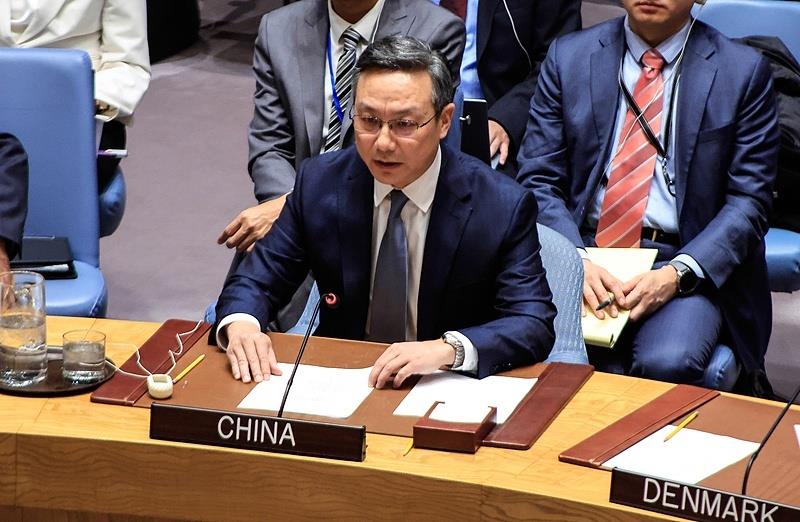
Recent statements from China have reignited debates over Japan's potential permanent seat on the United Nations Security Council (UNSC). Chinese representative Sun Yan, during the 80th UN General Assembly session, strongly opposed Japan's candidacy, questioning its commitment to international peace and its historical stance on military aggression. This sentiment was echoed across major Chinese media outlets, including Xinhua and Sina, both emphasizing Japan's unresolved historical issues and its perceived militaristic resurgence.
Global Implications: For international markets and investors, China's vocal opposition to Japan's UNSC bid underscores the persistent geopolitical tensions in East Asia, which can impact regional stability and economic relations. Businesses involved in Japanese markets or those with supply chain dependencies in the region should monitor these developments closely, as they could affect trade policies and bilateral relations.
Policy Reactions: The U.S. and EU, which have been supportive of Japan's more active role in international security, may need to navigate these diplomatic waters carefully. Japan's bid is part of a broader strategy to contribute more significantly to global peacekeeping, which aligns with Western interests in balancing China's influence.
Strategic Significance: The broader strategic implications involve the shifting balance of power in Asia. China's opposition highlights its intention to maintain a dominant role in regional security frameworks, which could influence how other countries, particularly in the Asia-Pacific, align their foreign policies.
Overall, these developments illustrate the complex interplay between historical grievances and contemporary geopolitical strategies, making it a critical issue for international observers to follow.
Deadly Fire in Karachi Shopping Center Highlights Safety Concerns and Economic Impacts
The recent tragic fire at a shopping center in Karachi, Pakistan, has drawn significant attention, with the death toll now reaching 61 according to CCTV and 60 as reported by Xinhua. Both sources confirm that the fire, suspected to have been caused by an electrical short circuit, resulted in substantial economic losses estimated at approximately $3.6 billion USD.
The CCTV report emphasizes the scale of the disaster, noting the economic repercussions that could affect local and regional markets. This highlights the critical need for improved safety regulations and infrastructure investments in developing economies, which are essential to mitigate such risks that can disrupt local businesses and foreign investments.
Xinhua provides additional details on the human toll, reporting that many victims were found in an attempt to secure themselves within the store, hoping to survive the blaze. This underscores inadequacies in emergency response and building safety standards, issues that resonate beyond Pakistan as they reflect broader challenges faced by rapidly urbanizing regions worldwide.
For international markets, the incident serves as a stark reminder of the vulnerabilities in global supply chains, particularly in regions where infrastructure and regulatory oversight may lag behind economic growth. Investors and businesses with interests in such regions should consider the potential risks and ensure that they are factored into their strategic planning.
Furthermore, the fire has implications for policy discussions in the US, EU, and other regions concerning international aid and development support. It accentuates the importance of international cooperation in enhancing safety standards and emergency preparedness in emerging markets.
In summary, while the immediate focus remains on the human and economic toll of the Karachi fire, its broader implications for global supply chains, investment strategies, and policy frameworks are equally significant. This tragedy serves as a catalyst for renewed discussions on safety and infrastructure investments in similar urban landscapes around the world.
EU Trade Agreements Face Hurdles Amid US Tariff Threats: Global Implications for Transatlantic Trade Stability
Recent developments in the European Union's (EU) trade negotiations highlight significant tensions with the United States, as reported by Xinhua. The EU has decided to temporarily halt the approval of the EU-US trade agreement due to US President Trump's announcement of tariffs on eight European countries, in retaliation for US acquisition of Greenland. This move has prompted the EU to reconsider its legislative proposals related to the trade agreement until the US returns to a cooperative stance. This pause introduces uncertainty into transatlantic trade relations, which require stability and predictability for effective economic engagement.
The EU's internal discussions, as detailed in the report, reveal a strategic pause in advancing the trade agreement while seeking a unified position among member states. This is crucial for engaging in negotiations with the EU Council and ensuring commitments under the trade agreement are met. The implications for international markets are profound, as stability in transatlantic trade relationships is essential for global economic equilibrium. Investors and businesses worldwide should be mindful of these developments, as prolonged tensions could disrupt supply chains and affect market access.
Meanwhile, another report by Xinhua highlights the EU's internal challenges with the EU-South America Free Trade Agreement. The European Parliament's decision to refer the agreement to the EU Court of Justice for review could delay its implementation, further complicating the EU's trade landscape. This move reflects internal EU debates on legal adherence to EU treaties and underscores the complexities of ratifying international agreements. The delay could hinder the EU's efforts to deepen ties with South American nations and leverage this relationship as a counterbalance to US trade policies.
For policymakers in the US, EU, and beyond, these developments stress the need for diplomatic engagement to prevent further escalation of trade disputes. The broader strategic implications suggest a potential reconfiguration of global trade alliances, where the EU might seek closer ties with other regions to compensate for strained US relations. This reorientation could alter existing trade patterns, impacting businesses and investors reliant on transatlantic commerce.
Overall, the ongoing trade tensions and legislative hurdles within the EU serve as a reminder of the intricate dynamics at play in international trade relations. Stakeholders globally should remain vigilant, as these events may signal shifts in trade policies and economic alliances that could reshape the global market landscape.
China's New Governance Models: Party Discipline and Financial Oversight with Global Repercussions
Recent developments in China's political and economic governance highlight significant shifts in both domestic policy and their potential global implications. Two major stories illustrate these shifts: the reinforcement of party discipline under Xi Jinping's leadership and the introduction of new financial oversight regulations in Jiangsu Province.
The CCTV News article focuses on the Chinese Communist Party's (CCP) efforts to enhance internal discipline through the 'Eight Provisions' policy, a framework aimed at combating corruption and ensuring strict governance within the party. This initiative, spearheaded by President Xi Jinping, underscores China's intent to maintain political stability and reinforce the CCP's authority. The emphasis on continuous education and discipline within party ranks suggests a long-term strategy to ensure loyalty and prevent dissent. Internationally, these measures could signal a more assertive and unified Chinese foreign policy, impacting diplomatic engagements and economic negotiations with other countries.
In parallel, the Sina News article reports on Jiangsu Province's new financial oversight regulation, which introduces a comprehensive 'Five-in-One' supervision framework. This regulation aims to eliminate financial 'blind spots' and enhance the transparency and accountability of fiscal operations. By utilizing digital technologies such as big data and artificial intelligence, Jiangsu is setting a precedent for integrating technology into governance. This development could influence China's broader economic policy by promoting a more stable financial environment, which in turn might attract foreign investments and improve international economic collaborations.
These developments indicate China's dual approach to governance: tightening political control while modernizing economic oversight. For international markets and policymakers, these shifts suggest a China that is increasingly self-assured and potentially more formidable in its economic and diplomatic engagements. Businesses and investors should monitor these changes closely, as they could affect global supply chains, investment climates, and trade policies. Moreover, the integration of technology into governance in Jiangsu could serve as a model for other regions, potentially leading to a more standardized and predictable business environment across China.
Japan's Nuclear Power Plant Restart Raises Global Energy Security Concerns
Japan's decision to restart the Kashiwazaki-Kariwa nuclear power plant, its largest, marks a significant development in the country's energy strategy post-Fukushima. The CCTV report highlights the plant's reactivation on January 21, 2026, under Tokyo Electric Power Company's (TEPCO) management. This move follows a prolonged shutdown since the 2011 earthquake and the subsequent Fukushima disaster.
The restart comes amid ongoing safety concerns, as recent tests revealed issues with control rods, leading to delays. Local civic organizations have expressed apprehension, citing incomplete resolution of Fukushima's aftermath and potential risks associated with aging nuclear facilities.
Internationally, this development is crucial as it signals Japan's shift towards nuclear energy to ensure energy security and reduce carbon emissions. For global markets, especially in the energy sector, this may influence nuclear fuel demand and impact energy prices worldwide. Businesses and investors should consider the implications for nuclear energy investments and the potential for increased regulatory scrutiny.
Regionally, this move may prompt policy responses from countries reliant on nuclear energy, potentially affecting the EU's energy transition strategies. For the US and other nations, it underscores the importance of balancing energy security with safety and environmental concerns, a narrative that resonates globally as countries navigate their energy futures.