
China's AI Surge; Iran's Maritime Tensions; Japan's Military-Economic Pivot: Global Implications Unveiled
China's AI Advancements and Global Strategic Implications
Recent coverage from diverse sources highlights China's rapid advancements in AI technology and the strategic implications for international markets and policies. According to an article from New York Times, China's AI models are narrowing the performance gap with Western counterparts like Anthropic and OpenAI. This suggests a significant shift in the global AI landscape, where China's growing capabilities could challenge US and EU tech dominance, prompting potential policy shifts and increased investment in AI research globally.
CCTV's report (source) emphasizes China's unique advantages in AI deployment, showcasing its integration into various sectors. This indicates a strategic push to leverage AI for economic growth, potentially influencing global supply chains and creating new market dynamics. For international businesses and investors, this development underscores the importance of aligning with China's AI strategy to remain competitive.
Xinhua's coverage (source) on the launch of the 'Xinhua Dictionary' AI platform highlights China's commitment to digital innovation and information dissemination. This move represents China's strategic use of AI to enhance its soft power and information influence, which could impact global media landscapes and information flows.
The Qiushi Journal article (source) discusses China's innovation-driven economic strategy, reinforcing the narrative that China's technological advancements are pivotal to its economic upgrading. This reflects a broader trend where China's innovation initiatives, such as the 'China Opportunity 2.0', are positioned to attract global investments and partnerships, reshaping international economic engagements.
Furthermore, Xinhua's report (source) on the Summer Davos Forum underscores China's role as a global innovation leader, with discussions focusing on scaling AI applications. This suggests that China's technological ecosystem is becoming increasingly influential, with potential ripple effects on global tech policies and innovation ecosystems.
In another Xinhua article (source), the focus on China's aerospace industry in Xiong'an illustrates the country's strategic investments in satellite technology and space exploration. This development not only enhances China's technological prowess but also signifies its ambitions to lead in space technology, which could provoke new international collaborations and competitions in space exploration.
Lastly, the detailed analysis from Xinhua (source) on AI's role in vertical industries highlights the transformative impact of AI on manufacturing, healthcare, and energy. This reinforces the view that AI is a key driver of industrial modernization, with significant implications for global economic structures and labor markets.
Overall, these articles collectively portray a narrative of China's strategic use of AI to bolster its economic and geopolitical standing. For international audiences, understanding these developments is crucial as they influence global market trends, policy decisions, and competitive dynamics in technology and innovation.
Iranian Attacks on Shipping in the Strait of Hormuz Disrupt Global Trade Routes and Raise International Tensions
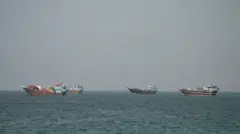
Recent reports from various international media outlets have highlighted escalating tensions in the Strait of Hormuz, a critical maritime chokepoint for global energy supplies. On June 25, a New York Times article reported that Iranian forces attacked a Singapore-flagged cargo ship in the Strait, leading to the suspension of evacuation operations for over 11,000 stranded seafarers. The article emphasized the global implications of such disruptions, noting that the Strait is a vital artery for oil and gas transport, and any instability there could have significant repercussions on international energy markets and geopolitical relations (New York Times).
Xinhua News provided a detailed account of the incident, confirming the attack and highlighting Iran's warning that ships must adhere to designated navigation routes or face consequences. The report underscored the broader strategic implications, as the disruption in the Strait could lead to increased tensions between Iran and Western nations, particularly the United States, which has historically maintained a military presence in the region to ensure the free flow of commerce (Xinhua).
The BBC also covered the incident, noting that the International Maritime Organization (IMO) had initially planned to evacuate the stranded seafarers but suspended the operation following the attack. The report highlighted the geopolitical stakes, as the Strait of Hormuz is not only a critical passage for oil but also a potential flashpoint for military conflict, with Iran, the U.S., and other regional powers having vested interests in the area. The BBC pointed out the economic impact, with oil prices experiencing volatility due to the perceived threat to supply chains (BBC).
These developments indicate a heightened risk of conflict in the region, which could disrupt global trade routes and exacerbate tensions between Iran and the West. International businesses and investors should be aware of the potential for increased oil prices and supply chain disruptions. Additionally, policymakers in the U.S., EU, and other regions must consider the strategic implications of Iran's actions and the need for diplomatic or military responses to ensure maritime security. The situation underscores the interconnectedness of global trade and the importance of maintaining stability in critical regions like the Strait of Hormuz.
Japan's Military-Economic Shift Raises Global Strategic Concerns
Recent developments in Japan indicate a significant shift in its military and economic posture, which has profound implications for international markets, regional security dynamics, and global economic strategies. An analysis of several articles reveals this transformation and its potential impacts.
The article from Xinhua highlights Japan's increasing military expenditure and strategic reorientation towards a 'war economy'. This shift is seen as Japan accelerating its military capabilities and restructuring its economic activities under military logic. The report suggests that Japan's actions are not merely quantitative changes in military capacity but represent a qualitative transformation of its national identity and strategic direction. This evolution is described as a 'new militarism', with economic activities increasingly aligned with military needs, posing a challenge to the post-war peace order and necessitating international vigilance.
The potential global implications of this shift are significant. For international markets and investors, Japan's increased defense spending and military-industrial complex could lead to greater demand for military technology and related industries, potentially altering global supply chains. Additionally, Japan's move to export military equipment, such as its agreement with Australia, marks a departure from its post-war pacifist policies and could affect global arms trade dynamics.
From a geopolitical perspective, these developments may influence US and EU policies towards Japan and the broader Asia-Pacific region. As Japan strengthens its military capabilities, the US may seek closer defense collaborations, which could affect regional security arrangements and alliances. The EU, on the other hand, might need to reassess its strategic partnerships in light of Japan's evolving role.
Meanwhile, CCTV provides a brief mention of Japan's direction towards increased militarization, indicating a broader regional concern over Japan's strategic intentions. This aligns with China's apprehensions about the potential destabilization of the Asia-Pacific security order.
Overall, Japan's strategic pivot towards integrating its economy with military objectives signals a potential shift in global power dynamics. For international readers, understanding these developments is crucial as they could reshape economic strategies, influence geopolitical alliances, and impact regional stability in the coming years.
France and Italy Propose Multinational Alliance for Libya: Implications for Global Stability
Recent statements from French President Emmanuel Macron highlight a strategic shift in European involvement in Libya, as France and Italy seek to establish a multinational alliance to support the region. This development follows the planned withdrawal of the United Nations' temporary mission in Libya, known as the UN Support Mission in Libya (UNSMIL), by the end of 2026. The proposed alliance aims to coordinate with the European Union and the United Nations to uphold Libyan sovereignty and bolster its armed forces.
According to reports from CCTV and Sina, Macron's announcement was made during a joint press conference with Italian Prime Minister Giorgia Meloni in the southern French city of Antibes. Macron emphasized the importance of maintaining international presence in Libya to prevent a "security vacuum" that could lead to instability. Meloni echoed this sentiment, stressing the critical role of international forces in ensuring regional security.
This initiative has significant implications for international markets and geopolitical stability. For businesses and investors, the stabilization of Libya could open up new opportunities in sectors such as energy, infrastructure, and reconstruction. The EU's involvement signals a commitment to securing energy supplies and addressing migration challenges, which are pertinent issues for European policymakers.
For the US and other regions, the proposed alliance reflects a broader strategic interest in preventing Libya from becoming a breeding ground for extremism and a point of leverage for rival powers. The coordination with the UN highlights the importance of multilateral approaches in addressing complex international conflicts, setting a precedent for future international collaborations.
Overall, this development underscores Europe's proactive stance in Libya and its potential to reshape regional dynamics, offering a blueprint for collective security initiatives in other conflict zones worldwide.
Ecuador Earthquake Highlights Global Vulnerabilities in Seismic Zones
The recent strong earthquakes in Ecuador, with magnitudes of 7.2 and 7.5, have brought significant destruction to the capital, Caracas, and resulted in numerous casualties, as reported by World Journal. This disaster, although occurring far from the United States, has sounded alarm bells for California due to similarities in seismic activity and infrastructure vulnerabilities. The article emphasizes the prevalence of non-ductile concrete buildings in both Ecuador and California, which are highly susceptible to collapse during strong tremors. This has implications for international investors and businesses operating in earthquake-prone regions, as it underscores the need for robust infrastructure investments and disaster preparedness measures.
World Journal's analysis draws parallels between the Ecuador earthquake and past seismic events in Taiwan, New Zealand, Mexico, Turkey, and Syria, highlighting the recurring issue of inadequate building codes and retrofitting efforts. The publication calls for accelerated seismic strengthening of old buildings and enhanced public disaster preparedness, which are crucial steps for reducing potential economic losses and safeguarding lives in future earthquakes.
Meanwhile, CCTV News succinctly reports on the death toll, which has risen to 235, without delving into broader implications or historical context. This difference in coverage indicates a focus on immediate factual reporting rather than an analysis of potential risks and strategic responses, which are crucial for policymakers and international stakeholders.
The Ecuador earthquakes serve as a stark reminder of the global vulnerabilities posed by seismic zones, particularly in regions with aging infrastructure. For the US, EU, and other regions, these events highlight the importance of proactive measures in urban planning and international cooperation in disaster risk reduction. The broader strategic implications extend to global supply chains, insurance markets, and humanitarian assistance frameworks, underscoring the interconnected nature of natural disasters and their far-reaching consequences.
Japan's Chiba Earthquake Highlights Regional Resilience and Global Preparedness
On June 26, a significant earthquake with a magnitude of 5.8 struck the northeastern part of Chiba Prefecture, Japan, as reported by Liberty Times. The tremor, originating at a depth of about 50 kilometers, was felt widely across the region, including in Tokyo, where it registered a maximum intensity of 4 on the Japanese seismic scale. Fortunately, the Japan Meteorological Agency confirmed that the earthquake did not trigger any tsunami warnings, easing immediate concerns for coastal communities.
Similarly, World Journal emphasized the impact felt in various areas, including southern Ibaraki Prefecture and parts of Saitama Prefecture, where the seismic intensity reached levels of 3 to 4. The uniformity in reporting across these outlets underscores the quake's widespread perception and the robust infrastructure that mitigated potential damages.
For international audiences, this earthquake serves as a reminder of the importance of disaster preparedness and resilient infrastructure, not only in Japan but globally. Investors and markets can draw confidence from Japan's capability to handle such natural events with minimal disruption. Moreover, this incident prompts policymakers in earthquake-prone regions worldwide to reassess their readiness and reinforce infrastructural resilience.
Globally, the quake highlights the critical need for advanced seismic technologies and international cooperation in disaster management strategies. As nations grapple with climate change and increased natural disasters, sharing best practices becomes crucial for safeguarding lives and economies.
Xi Jinping's Meeting with Cambodian Leaders: Implications for Regional Stability and Global Trade
In a recent meeting in Beijing, Chinese President Xi Jinping engaged with Cambodia's People's Party Chairman and Senate President, Hong Sen, highlighting the strengthening ties between China and Cambodia. The report by CCTV emphasized the strategic partnership and collaboration in various sectors, including infrastructure and trade.
This development underscores China's continued influence in Southeast Asia, a region of significant strategic interest to global powers, including the U.S. and EU. For international markets and businesses, the deepening China-Cambodia ties could affect regional trade routes and investment opportunities, particularly in infrastructure projects under China's Belt and Road Initiative.
For policymakers in the U.S. and EU, this meeting signals China's growing soft power and influence in ASEAN countries, which may necessitate a recalibration of diplomatic and economic strategies in the region. The strengthening of China-Cambodia relations could also impact regional stability, especially in the context of U.S.-China competition in Southeast Asia.
For global investors, this partnership may open new avenues for investment in Cambodia, potentially increasing the country's economic growth and integration into global supply chains. However, it also highlights the geopolitical complexities of investing in a region where China is a dominant player.
Ultimately, Xi's meeting with Cambodian leaders not only reflects China's regional ambitions but also its broader strategy to cement alliances that could reshape the geopolitical and economic landscape in Southeast Asia, with far-reaching implications for global trade and diplomacy.