
Geopolitical Tensions; AI Advancements; Japan's Diplomatic Challenges; China's Energy Strategy; Epstein Case Media Analysis
The Unfolding of the Epstein Case: A Comparative Media Analysis
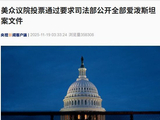
Recent events show a notable convergence in media narratives surrounding the U.S. Congress's decision to mandate the release of documents related to Jeffrey Epstein's case. Xinhua highlights the bipartisan legislative effort to ensure the public disclosure of Epstein-related files, emphasizing the political rift within the Republican Party. It also notes former President Trump's shift in stance, advocating for transparency after previously opposing it.
Liberty Times underscores the internal divisions within the Republican Party, specifically mentioning Congresswoman Marjorie Taylor Greene's press conference advocating for document transparency despite her alignment with Trump on other issues. This narrative suggests a potential political fallout for Trump, as his earlier resistance to the case's transparency has become a point of contention among his supporters.
It appears that Sina offers a detailed account of the legislative process, highlighting the near-unanimous vote in the House of Representatives and the subsequent approval by the Senate. It raises concerns about the potential repercussions of releasing sensitive information that could affect a wide array of individuals, including witnesses and family members.
The news highlights the contrasting approaches of different publications in portraying the same event. While Xinhua and Liberty Times focus on the political dynamics and implications for Trump's political base, Sina provides a more procedural perspective, emphasizing the legislative process and its broader societal implications. These developments indicate a complex interplay between media narratives and political maneuvering, reflecting the multifaceted nature of the Epstein case and its impact on U.S. politics.
Diplomatic Tensions: Japan and China Clash Over Taiwan Remarks
Recent events highlight the diplomatic friction between Japan and China following remarks by Japan's Prime Minister on Taiwan. World Journal reports that Japan's Prime Minister Fumio Kishida's comments regarding Taiwan led to strong backlash from China. In response, the Chinese Foreign Ministry summoned Japan's ambassador, stressing the sensitivity of Taiwan-related issues.
These developments indicate a broader geopolitical tension, with Japan's internal debates on its foreign policy approach towards China. As reported by World Journal, Japanese officials anonymously revealed that the government is cautious, recognizing that the Taiwan issue is a 'tiger's tail' that could lead to prolonged diplomatic challenges.
The news highlights contrasting portrayals in the media. Chinese state media, as noted in the report, depicted the encounter as Japan being lectured by China, with visuals showing Chinese officials in a dominant posture. This narrative seems designed to bolster China's image of strength and assertiveness.
Conversely, Japanese online forums criticized the demeanor of Chinese officials, suggesting that the actions were deliberately theatrical, intended to project power. Users described the behavior as overly aggressive and disrespectful, reflecting a sentiment of unease over China's diplomatic conduct.
It appears that both nations are leveraging media narratives to consolidate their domestic and international standing. As these diplomatic interactions unfold, the potential for informal discussions at international forums, such as the G20, remains a critical avenue for dialogue, albeit with limited expectations for breakthroughs.
Diverging Perspectives on Japan's UN Security Council Aspirations and Nuclear Policy
Recent events highlight a contentious debate over Japan's qualifications to become a permanent member of the United Nations Security Council. According to Xinhua, China's representative to the UN, Fu Cong, criticized Japan's Prime Minister Fumio Kishida for his provocative comments on Taiwan, which were seen as interference in China's internal affairs. Fu argued that such actions violate international justice and post-war international order, undermining Japan's credibility and qualifications for permanent membership.
Similarly, CCTV echoed this sentiment, reiterating the stance that Japan's actions are inconsistent with the principles of peaceful development and international norms. Both Xinhua and CCTV underline the gravity of Japan's perceived violations, emphasizing China's disapproval of Japan's interference in regional matters.
In a related development, Xinhua reported on domestic opposition within Japan to Kishida's plans to amend the "Three Non-Nuclear Principles". Local officials from Hiroshima and Nagasaki, historical sites of atomic bombings, voiced strong objections, arguing that Japan should adhere to its long-standing policy of not possessing, producing, or introducing nuclear weapons. This opposition underscores a domestic tension between national defense strategies and public sentiment rooted in historical experience.
These developments indicate a complex interplay of international and domestic factors influencing Japan's geopolitical aspirations and defense policies. The consistent narrative across Chinese state media suggests a strategic effort to question Japan's suitability for an elevated role in international governance, while highlighting internal dissent as a challenge to Japan's policy direction.
China's Energy Preparations for Winter: A Comparative Analysis
Recent reports highlight China's comprehensive efforts to ensure stable energy supplies during the upcoming winter. Sina News describes how China Petrochemical has launched its geothermal heating services, covering 70 cities across 11 provinces, benefiting over 1.2 million households. The company's geothermal capacity has reached 1.26 billion square meters, marking a historic high. This initiative is part of a broader strategy to reduce carbon emissions by 6.2 million tons annually. The use of smart systems and AI customer service further underscores the emphasis on technological integration to maintain service quality.
Meanwhile, another report from Sina News focuses on the Southern Power Grid's preparations for increased electricity demand, expected to grow by 9.4% this winter. Efforts include reinforcing transmission lines and enhancing ice resistance capabilities, particularly in regions prone to harsh weather. The deployment of meteorological sensors and AI systems for real-time monitoring reflects a proactive approach to managing potential disruptions.
These developments indicate a robust and technologically advanced strategy to meet energy demands during peak winter periods. While both articles from Sina News emphasize the integration of smart technologies, the first highlights geothermal solutions and their environmental benefits, whereas the second focuses on infrastructure resilience and the adoption of AI for operational efficiency. Together, they paint a picture of a nation investing heavily in its energy infrastructure to ensure stability and sustainability.
Escalating Tensions: Airstrikes in Southern Lebanon
Recent events highlight a significant escalation in tensions as Israeli airstrikes targeted a Palestinian refugee camp in southern Lebanon, resulting in at least 13 fatalities. Xinhua reports that the Israeli Defense Forces justified the attack by claiming that the camp was used by Hamas for military training against Israel. The airstrike involved drones firing missiles, which struck a mosque and a nearby car, igniting a large fire. Israeli sources characterized these operations as "rare" but necessary to counter Hamas activities.
Liberty Times corroborates the casualty figures and adds that the attack occurred in Sidon, a key city in southern Lebanon. They emphasize the Israeli military's assertion that the site was a training ground, though Hamas disputes this claim, accusing Israel of fabricating justifications for their actions. The report also notes that the Israeli military often targets areas believed to be used by Hezbollah and Hamas, supported by Iran.
These developments indicate a volatile situation, with both sides presenting conflicting narratives. Xinhua's coverage leans towards emphasizing Israel's military rationale, while Liberty Times focuses on the humanitarian impact and the broader geopolitical implications. The contrasting narratives suggest differing editorial intentions: Xinhua appears to align with a more defensive Israeli stance, whereas Liberty Times highlights the consequences of military actions on civilian populations.
Analyzing China's Push for Comprehensive Rule of Law
Recent events show a concerted effort by China to reinforce the rule of law as a cornerstone of governance. The Central Conference on Comprehensive Rule of Law, held in Beijing, highlighted President Xi Jinping's directives to adhere to the Party's leadership while ensuring that the people's role as masters and the rule of law are unified. This conference marks a significant step in China's legal framework development, emphasizing the importance of constructing a new legal order.
Similarly, the CCTV report underscores the achievements since the 18th Party Congress, acknowledging the progress in building a socialist legal system with Chinese characteristics. These developments indicate a strategic focus on enhancing legal structures to support China's socio-economic goals, including a higher level of socialist rule of law and the promotion of scientific legislation, strict law enforcement, and fair judiciary processes.
The articles consistently emphasize the integration of legal principles with China's broader developmental strategies. For instance, Xi's call for "two greater focuses"—emphasizing the coordination of rule of law with reform, development, and stability—illustrates the interconnectedness of legal reform with economic and social progress. This narrative is designed to foster confidence in the Party's governance model and its ability to navigate complex socio-political landscapes.
Overall, it appears that the Chinese government is positioning the rule of law as a critical mechanism for achieving high-quality development and modernization. By framing legal reform as an ongoing revolutionary endeavor, the articles collectively aim to bolster national pride and support for the Party's leadership, while also addressing contemporary challenges such as environmental protection and economic transformation.
Geopolitical Tensions and Economic Shifts: A Comparative Analysis
Recent events show a significant shift in trade dynamics between China and Europe, as reported by Sina. The article highlights China's trade surplus with the EU surpassing that with the U.S., marking a pivotal moment since the 2008 financial crisis. This shift underscores China's industrial upgrades, particularly in sectors traditionally dominated by Europe, such as automotive and aerospace, posing challenges to European industries, notably in Germany. The analysis suggests that U.S. tariffs under the Trump administration may have inadvertently bolstered China's competitive edge in Europe, compelling European industries to confront intensified Chinese competition both domestically and in third markets.
The news highlights the strategic conundrum facing European policymakers, caught between maintaining transatlantic relations and managing economic ties with China. The Sina piece suggests that while European industries face mounting pressure from Chinese imports, the EU's trade protectionist measures may not adequately address the underlying competitiveness issues.
Meanwhile, tensions between China and Japan are escalating, as discussed in Liberty Times. The narrative revolves around recent diplomatic spats triggered by comments from a Chinese diplomat, leading to China's retaliatory measures such as suspending travel and conducting military exercises. The article portrays a scenario familiar to Taiwan, implying Japan's potential unpreparedness for such diplomatic maneuvers.
It appears that despite strained relations, the allure of Japan as a travel destination for Chinese tourists remains strong, with numbers significantly increasing. The analysis by Liberty Times emphasizes Japan's strategic military and economic preparations, reflecting its response to heightened regional tensions.
These developments indicate a broader geopolitical reshuffling, with China asserting its economic and strategic influence across different fronts. While Sina focuses on economic implications within Europe, Liberty Times underscores the diplomatic and military aspects of China's relations with Japan. Together, these narratives paint a picture of China's multifaceted approach to advancing its interests globally.
The Rise of AI: China's Strategic Integration and Google's Technological Leap
Recent events show a dynamic shift in the global AI landscape, driven by strategic integration in China and technological advancements in the U.S. through Google. A comprehensive analysis of various publications reveals contrasting approaches and narratives.
Xinhua highlights China's ambitious strategy to integrate AI across its economic sectors. The narrative underscores AI's role as a core driver of technological and industrial transformation, emphasizing its capacity to reshape production elements, industry structures, and governance models. This integration is seen as pivotal for China to secure a strategic advantage in global technology and industry competition. The article describes AI's influence across manufacturing, agriculture, and services, illustrating its potential to enhance efficiency, productivity, and innovation. The emphasis on AI's systemic impact and governance optimization reflects China's strategic intent to harness AI for sustainable economic growth.
Meanwhile, Sina reports on Google's latest AI model, Gemini 3, marking a significant breakthrough in inferencing capabilities. Google's rapid integration of Gemini 3 into its core products on launch day illustrates the company's commitment to accelerating AI commercialization. The article highlights Gemini 3's enhanced performance in complex reasoning, programming, and image generation, setting new industry benchmarks. Google's approach emphasizes technological leadership, showcasing Gemini 3's capabilities to handle multi-modal information seamlessly. The model's performance in various benchmarks suggests its potential to revolutionize fields like software development and content creation.
These developments indicate a dual narrative: China focuses on strategic, systemic integration to bolster its economic framework, while Google advances technological prowess to maintain its competitive edge. Xinhua's portrayal of AI as a means to economic sustainability contrasts with Sina's emphasis on Google's technological achievements and market strategy. This comparison reveals differing objectives: China's strategic economic integration versus Google's pursuit of technological excellence and market dominance.