Geopolitical Tensions; AI Advancements; Japan's Military Moves; Space Science Leadership; EPL Drama; Diplomatic Exchanges; Cultural Loss
Divergent Narratives on the Russia-Ukraine Peace Plan
Recent events show a stark contrast in how different publications are framing the proposed peace plan aimed at resolving the Russia-Ukraine conflict. According to Sina News, Russia has dismissed the European peace proposal as lacking constructiveness and aligning with U.S. interests rather than addressing Russia's needs. This suggests a skepticism towards Western intentions and a preference for direct negotiations with the U.S.
On the other hand, another Sina News article highlights the domestic turmoil in the U.S. surrounding the 28-point plan, which was reportedly drafted by the White House. This plan includes significant demands on Ukraine, such as military reductions and NATO commitments, which have sparked debate and division within U.S. political circles. The article suggests that the plan's exposure has led to increased political pressure on President Trump, reflecting internal political dynamics and strategic calculations.
It appears that while Russian sources emphasize a narrative of Western proposals being unsatisfactory and biased, the U.S. narrative is more focused on the political implications and strategic motives behind the peace plan. These developments indicate a complex geopolitical landscape where each side is attempting to leverage the situation to its advantage, with potential implications for international relations and domestic policies.
Diplomatic Dynamics: Xi Jinping and Donald Trump's Exchanges
Recent events highlight the evolving diplomatic relations between China and the United States, as seen through the interactions between Chinese President Xi Jinping and former U.S. President Donald Trump. These developments, reported by various media outlets, underscore the nuanced narratives that shape the international stage.
The New York Times focuses on Trump's acceptance of Xi's invitation to visit China in April 2026. This report provides a detailed analysis of the potential implications for U.S.-China relations, noting the strategic importance of this engagement against the backdrop of ongoing trade and geopolitical tensions. The article emphasizes the historical context of such meetings and their potential to reset bilateral ties.
In contrast, Xinhua, China's state news agency, briefly reports on a phone call between Xi and Trump. The succinct nature of this report suggests a focus on maintaining a positive diplomatic tone, highlighting the ongoing dialogue between the two leaders without delving into specific details.
The Chinese Foreign Ministry offers a more comprehensive account of the phone call, emphasizing the achievements of the recent Xi-Trump meeting in South Korea. It underscores the importance of mutual cooperation and the positive trajectory of China-U.S. relations, reiterating China's stance on Taiwan and its significance in post-war international order. The ministry's narrative promotes a vision of shared prosperity and peaceful coexistence, reflecting China's diplomatic priorities.
Overall, it appears that different publications tailor their narratives based on their audiences and geopolitical intentions. The New York Times provides a broader geopolitical context, while Chinese sources focus on diplomatic achievements and future cooperation, reflecting their respective strategic interests in shaping public perception.
Japan's Nuclear and Military Ambitions: A Geopolitical Crossroads
Recent events highlight Japan's increasing military posturing and its controversial nuclear material storage, which have drawn significant international scrutiny. An article from Sina discusses Japan's accumulation of plutonium, ostensibly for civilian nuclear energy purposes, but the sheer quantity suggests potential military intentions. This narrative is underscored by Japan's right-wing factions pushing to amend the 'Three Non-Nuclear Principles,' potentially allowing nuclear weapons on Japanese soil, which raises alarms over possible violations of the Non-Proliferation Treaty (NPT).
Another article from Sina paints a vivid picture of Japan's military maneuvers near Taiwan, interpreting them as provocative and dangerous, especially given the sensitive geopolitical climate. The piece suggests that Japan's actions could exacerbate regional tensions, with Chinese officials expressing strong opposition to these developments.
Meanwhile, CCTV provides analysis from experts who argue that Japan's moves are part of a broader strategy to break free from post-World War II constraints. This includes a shift towards military normalization and a strategic pivot influenced by both internal right-wing pressures and external encouragement from the United States.
These developments indicate a complex interplay of historical grievances, strategic calculations, and geopolitical rivalries. The varied coverage across these publications reflects differing perspectives on Japan's intentions, with Chinese media generally portraying Japan's actions as a threat to regional stability and a challenge to global non-proliferation norms.
China's Advancements in Space Science and International Scientific Cooperation
The recent developments in China's space science sector reveal significant advancements and international collaboration efforts. The first article from Xinhua highlights China's achievements in space science, particularly through the successful development and launch of eight scientific satellites such as the 'Wukong' and 'Mozi'. These efforts have enabled China to transition from 'following' to 'leading' in certain areas of space science, showcasing a robust and accelerating development trajectory.
Meanwhile, the second article details the launch of an international scientific plan focused on fusion energy, emphasizing China's leadership in the 'BEST' installation, a new generation of artificial sun aimed at achieving energy production greater than consumption by 2030. This initiative, involving collaboration with over ten countries, underscores China's ambition to address future energy challenges through scientific innovation and international cooperation.
Additionally, the third article further explores China's strategic shift in space science, marking the transition to innovation-driven development. This article highlights the integration of multiple scientific disciplines and international partnerships, particularly with European space agencies, to enhance satellite capabilities and scientific data sharing.
Collectively, these articles from Xinhua illustrate China's strategic positioning in the global space science arena through technological breakthroughs and international collaborations. By focusing on both domestic innovation and international partnerships, China aims to bolster its standing as a leader in space science and energy solutions.
The Passing of South Korea's Beloved Actor Lee Soon-jae
Recent events show a significant loss in the South Korean entertainment industry with the passing of the esteemed actor Lee Soon-jae at the age of 91. Coverage from Sina highlights his long-standing career and influence, describing him as the 'nation's grandfather.' His roles across television dramas such as 'The Men of the Bath House Boss' and 'What is Love' have cemented his legacy in Korean pop culture. Notably, Lee's work in the television series 'What is Love' was pivotal, being one of the first Korean dramas introduced to Chinese audiences in 1997, achieving remarkable viewership.
According to World Journal, Lee's death on November 25th, shortly after his 91st birthday, has deeply saddened fans and peers alike. His dedication to the arts spanned over half a century, making him the oldest active performer in South Korea. Despite recent health concerns, those close to him had denied any severe illness, underscoring the unexpected nature of his passing. Additionally, Lee's participation in variety shows like 'Flower Grandpa' brought him international acclaim, inspiring a wave of senior tourism.
These developments indicate a shared narrative of Lee Soon-jae's enduring legacy, with both sources celebrating his extensive contributions to Korean drama and his role as a cultural bridge. While Sina focuses on his impact within China, World Journal emphasizes his lifelong commitment to performance and his influence on contemporary Korean culture. The varied portrayals suggest an intention not only to honor his artistic achievements but also to emphasize the cross-cultural connections he fostered throughout his career.
Unveiling the AI 'Genesis Project': U.S. Strategic AI Initiative
Recent developments show a significant step by the U.S. administration in advancing artificial intelligence. Both CCTV and Sina report on President Trump signing an executive order to launch the 'Genesis Project'. This initiative aims to revolutionize scientific research methods using AI, accelerating scientific discovery.
The news highlights the establishment of an AI experimental platform by the U.S. Department of Energy, integrating America's supercomputers and unique data assets to generate foundational scientific models. This platform aims to support and enhance research in robotics.
These articles indicate a coordinated effort, led by the Assistant to the President for Science and Technology (APST), to integrate federal data and infrastructure, aiming for comprehensive national planning. Collaborations with academia and private innovators are emphasized to bolster the project.
Both reports present a unified narrative, reflecting a strong governmental push towards AI development. While CCTV provides a straightforward account, Sina adds editorial oversight, suggesting a slightly more curated narrative approach. This alignment in reporting underscores the strategic importance placed on AI by the U.S. administration, as conveyed through these Chinese media outlets.
Diplomatic Tensions Over Taiwan: Chinese Responses to Japanese Remarks
Recent events show a marked escalation in diplomatic tensions between China and Japan, primarily centered around remarks concerning Taiwan. CCTV reported that Chinese Foreign Minister Wang Yi, following a visit to Central Asia, criticized Japanese Prime Minister Sanae Takaichi's statements on Taiwan as an erroneous attempt to militarily intervene in the region. Wang Yi emphasized that these remarks crossed a red line and necessitated a firm response from China to defend its sovereignty and territorial integrity.
The news highlights how Wang Yi's comments were framed within the context of historical grievances, as this year marks the 80th anniversary of China's victory in the Anti-Japanese War and the global victory against fascism. By invoking history, the article underscores China's resolve to prevent any revival of militarism.
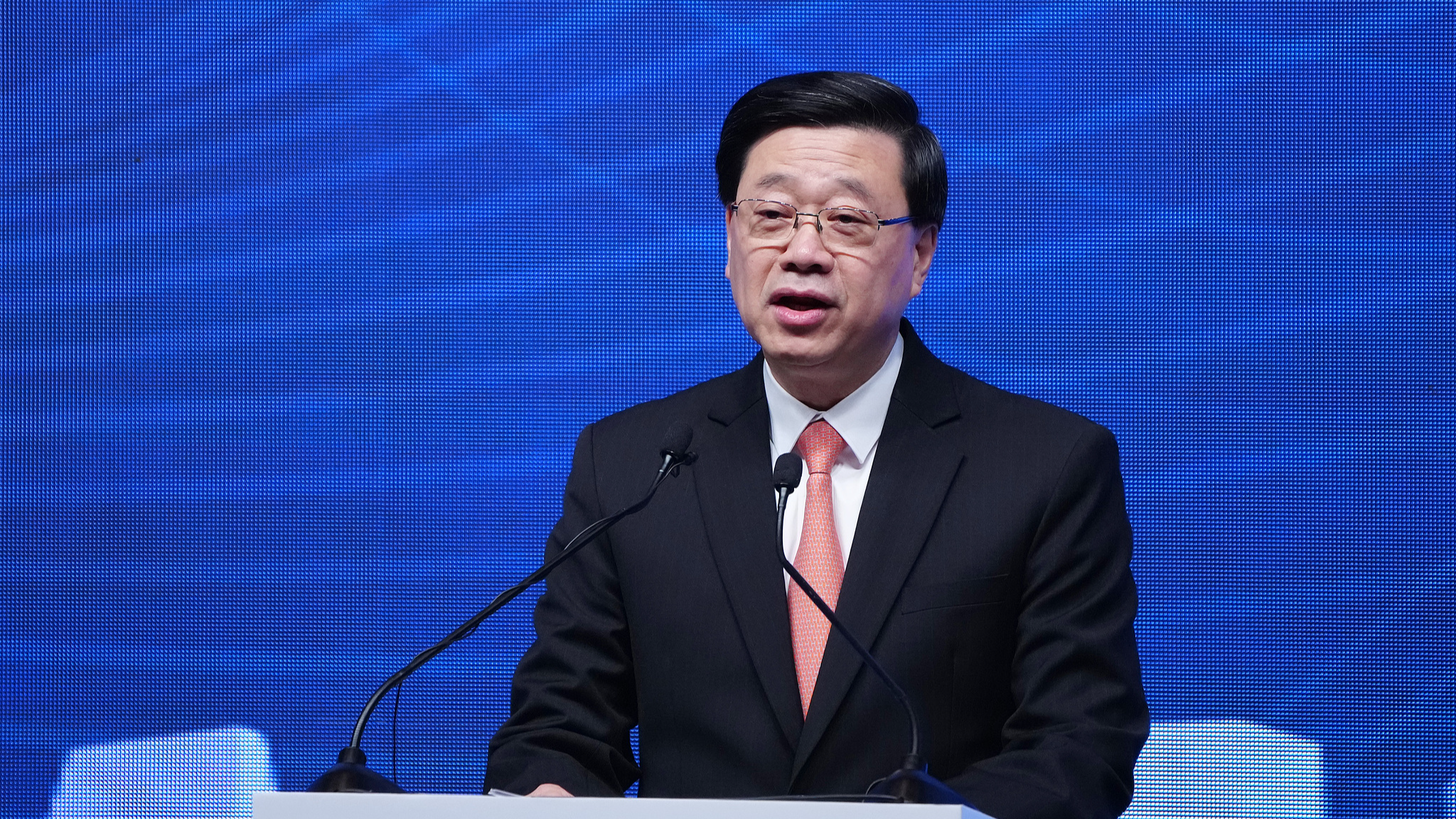
In contrast, CGTN focuses on the reaction from Hong Kong's Chief Executive, John Lee, who also denounced Takaichi's comments as "extremely erroneous." These developments indicate a broader regional impact, as Lee noted that such remarks have strained China-Japan exchanges and prompted the Hong Kong government to update travel advisories for Japan. Additionally, a planned educational exchange program to Japan was canceled over safety concerns for Chinese nationals.
It appears that both publications aim to convey a unified Chinese stance against perceived Japanese provocations regarding Taiwan, emphasizing historical sensitivities and current geopolitical dynamics. While CCTV stresses the historical and political context, CGTN highlights practical measures taken by the Hong Kong government in response to the diplomatic fallout. The differing angles reflect each outlet's focus, with CCTV providing a more nationalistic narrative and CGTN addressing regional implications and practical responses.
Dramatic English Premier League Clash: Manchester United vs. Everton
Recent events show a notable shift in the English Premier League standings following a dramatic match between Manchester United and Everton. According to Sina News, Manchester United fell to 12th place after a 0-1 defeat to Everton, who, despite being reduced to ten men, managed to secure a victory. This result allowed Everton to leapfrog to the 11th position, further complicating the league table dynamics.
The news highlights the intense nature of the match, with key moments such as a red card incident involving player Gayer and a decisive goal by Holt. As reported by Sina News, the game was marked by several contentious moments, including a missed opportunity by B Fee and a crucial save by Pickford that thwarted Manchester United's efforts to equalize.
These developments indicate a period of struggle for Manchester United, who have not won in three consecutive rounds, stagnating at 18 points alongside Everton. The coverage from both articles suggests a narrative of Manchester United's faltering form and Everton's resilience despite numerical disadvantage, reflecting on the unpredictable nature of the league this season.