
Geopolitical Tensions; China's Global Vision; Escalation in Gaza; Anti-Corruption in China
Geopolitical Tensions Surrounding U.S.-South Korea Relations and North Korean Missile Tests
Recent events highlight the geopolitical complexities surrounding U.S.-South Korea relations, marked by President Biden's visit to South Korea and the ongoing negotiations over a $350 billion investment agreement. United Daily News reports that while both nations aim to finalize a temporary trade agreement, disputes over investment conditions remain a significant hurdle. The U.S. administration's demand for South Korea to commit a substantial portion of its foreign currency reserves as a precondition for the investment has met with resistance, reflecting concerns about economic stability and currency fluctuations.
These developments indicate a broader strategic context, as another article from United Daily News outlines that the upcoming discussions between President Yoon and President Biden will also address North Korea's nuclear issue through South Korea's "END Initiative." This proposal seeks to promote peace on the Korean Peninsula through exchange, normalization, and denuclearization, with South Korea hoping for U.S. support to play a more proactive role in future dialogues.
Meanwhile, Xinhua and Sina report on North Korea's recent missile tests, emphasizing their strategic nature. The missiles, launched just one day before Biden's visit, demonstrate a show of military strength intended to challenge U.S. diplomatic efforts in the region.
In a similar vein, Liberty Times underscores North Korea's intentional timing of the missile tests as a direct challenge to Biden's visit, aimed at showcasing military prowess before any diplomatic engagements. The article suggests that North Korea's actions are designed to test the U.S. and South Korea's resolve and military readiness.
It appears that the varied narratives across these publications reflect differing focuses and intentions. While UDN emphasizes the economic and diplomatic negotiations between the U.S. and South Korea, Xinhua and Sina focus on North Korea's military maneuvers as a counterpoint to U.S. diplomatic efforts. Liberty Times, on the other hand, highlights the provocative nature of North Korea's actions as a strategic message to the U.S. and its allies.
China's Vision for Global Cooperation and Development
Recent events show a concerted effort by China to assert its role in global cooperation and development. In a speech at the 9th Future Investment Initiative in Saudi Arabia, Vice President Han Zheng emphasized China's commitment to promoting development and achieving prosperity, a common pursuit for countries worldwide, particularly in developing nations. Han's four-point proposal included strengthening innovation, promoting open cooperation, prioritizing people-centered development, and deepening solidarity-based collaboration. These proposals align with Xi Jinping's vision of building a community with a shared future for mankind, a recurring theme in China's diplomatic narrative. (source)
These developments indicate a strategic alignment with Xi Jinping's push for an Asia-Pacific community of shared destiny. Since 2013, Xi has consistently advocated for this vision, emphasizing regional cooperation and development. His speeches often highlight the importance of open, inclusive, and cooperative relationships among Asia-Pacific nations. The emphasis on shared economic growth and development is evident in initiatives like the Belt and Road, which aims to enhance connectivity and infrastructure across the region. (source)
The news highlights China's strategic positioning as a leader in promoting multilateralism and regional cooperation. By advocating for such initiatives, China positions itself as a stabilizing force in a rapidly changing global landscape. The narratives from both articles underscore China's commitment to fostering a resilient, inclusive economic environment, particularly in the Asia-Pacific, which is portrayed as a hub for global economic growth and stability. This approach not only seeks to enhance China's influence but also aims to create mutually beneficial relationships with other nations.
Escalation in Gaza: A Divergence in Narratives
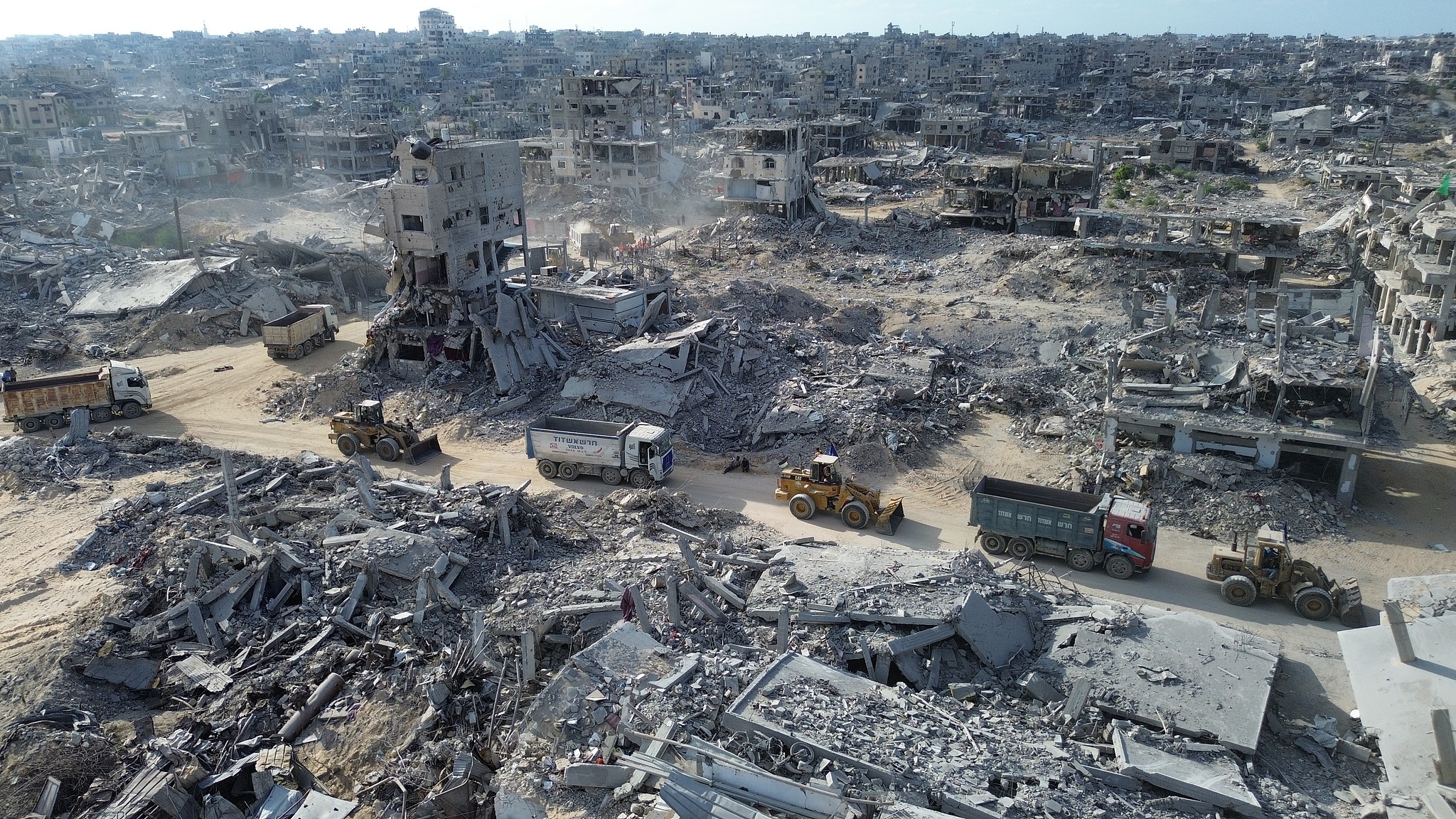
Recent events show a renewed outbreak of violence in Gaza as Israeli planes carried out strikes following accusations against Hamas for violating a ceasefire. CGTN provides a detailed account of the Israeli military actions, highlighting the resultant casualties and the fragile nature of the ceasefire brokered by the U.S. earlier this month. CGTN emphasizes the accusations from both sides about ceasefire violations and includes a statement from U.S. Vice President JD Vance, suggesting that despite skirmishes, the ceasefire remains intact.
These developments indicate a complex backdrop to the renewed hostilities. Xinhua reports on Israeli Prime Minister Benjamin Netanyahu's order for a "powerful strike" on Gaza, attributing the decision to perceived violations by Hamas. Xinhua’s narrative underscores the Israeli perspective, focusing on the justification for military action.
The news highlights the various narratives surrounding the ceasefire and subsequent military actions. CCTV and Sina both reiterate the Israeli stance, emphasizing the military’s response to what it views as Hamas's ceasefire violations. Both outlets mention Hamas’s denial and commitment to the ceasefire, reflecting the ongoing blame game.
It appears that different publications narrate the same events with varying emphasis. While CGTN provides a broader view with international implications, Xinhua, CCTV, and Sina focus more on the Israeli government's perspective, highlighting the complexity and the challenges facing peace efforts in the region.
Nationwide Supervisory Investigations in China: A Comprehensive Overview
Recent events show a rigorous crackdown by China's Central Commission for Discipline Inspection and the National Supervisory Commission, as detailed in three separate reports from Sina News. Between January and September 2025, a substantial number of cases were processed, with over 314,400 complaints received. Among these, 99,600 were categorized as accusations and reports, leading to the investigation and resolution of 197,600 cases.
These developments indicate a significant focus on accountability, with 78,900 cases leading to formal investigations. Notably, 90 officials at the provincial and ministerial levels were implicated, highlighting the scale of scrutiny within the upper echelons of government. Furthermore, 3,704 bureau-level officials and 31,000 county-level officials were also investigated, illustrating a broad scope of the anti-corruption drive.
The news highlights the application of the "four forms" of disciplinary action, which accounted for 1.376 million instances of criticism and education. Specifically, 688,000 instances involved the first form, representing a softer, preventative approach, while the second form accounted for 556,000 instances, involving more serious consequences.
It appears that the emphasis on transparency and rectitude permeates various levels of governance, with 67,700 individuals facing disciplinary actions, including 50,200 party disciplinary measures and 22,000 administrative sanctions.
These articles collectively underscore the Chinese government's commitment to maintaining integrity within its ranks. The consistent reporting across all three articles from Sina News, such as this one, suggests a unified narrative aimed at reinforcing the state's dedication to combating corruption. This narrative is further emphasized in another report, reiterating the same statistics and outcomes, thus reinforcing the transparency and seriousness with which these issues are being addressed.