Global Narratives: Russia-Japan Tensions; 2025's Global Challenges; North Korea's Military Ambitions; U.S. Actions in Nigeria; China's Economic Resilience
Russia Criticizes Japan's Historical Narratives: A Media Perspective
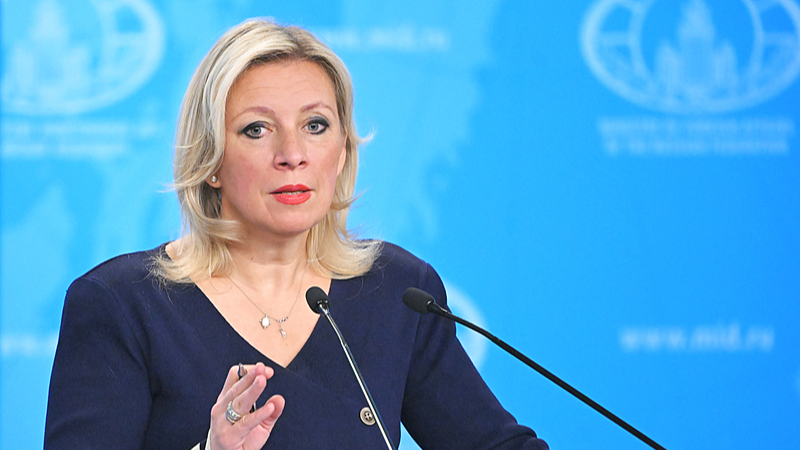
Recent events show a coordinated narrative from Russian media targeting Japan's historical actions during World War II. CGTN highlights Russia's condemnation of Japan's alleged attempts to whitewash its militaristic past. The article emphasizes the statement by Russian Foreign Ministry spokesperson Maria Zakharova, who criticized the potential visit by Japanese Prime Minister Sanae Takaichi to the Yasukuni Shrine, a site commemorating Class-A war criminals. Zakharova urges Japan to construct a memorial for the victims of Japanese militarism as an act of atonement.
Meanwhile, Sina reiterates the same message, quoting Zakharova's suggestion for Japan to establish a memorial hall. This piece underscores the need for Japan to acknowledge its wartime atrocities and abandon any attempts to gloss over its historical actions. The narrative remains consistent with CGTN, focusing on the theme of remembrance and atonement.
CCTV also covers Zakharova's statements, mirroring the call for a memorial and highlighting the Yasukuni Shrine as a symbol of militarism. The article reinforces the demand for Japan to confront its past and fully recognize the outcomes of World War II.
These developments indicate a unified stance from Russian media outlets, each reinforcing the narrative of historical accountability and reconciliation. The intention appears to be a concerted effort to pressure Japan into addressing its wartime history more openly and to remind international audiences of past grievances.
2025: A Year of Global Challenges and Transformations
Recent events show that 2025 has been a year marked by significant global challenges and transformations, as highlighted by various publications. CCTV's retrospective, "Our 2025," reflects on China's progress amidst national milestones and technological breakthroughs, painting a picture of forward momentum and resilience. This narrative is aligned with China's continued emphasis on national pride and development.
In contrast, Sina's article, "2025, A Year of American Discord," provides a stark portrayal of the United States, depicting it as a nation grappling with internal divisions and political polarization. The piece underscores the challenges faced by the US, including government shutdowns and public protests, reflecting a society in turmoil and questioning its national identity.
These developments indicate a broader theme of global instability, as reflected in another Sina article titled "Blame War for Wounds, Concerns of Extremism." This piece summarizes international leaders' reflections on a tumultuous year, emphasizing the ongoing conflict in Ukraine and the socio-economic pressures facing Russia. The article suggests that global power dynamics are shifting, with 2026 poised as a pivotal year for international relations.
The news highlights a recurring theme of fragmentation and uncertainty across different regions. While China's narrative focuses on progress and unity, the US and European perspectives are more concerned with internal and external conflicts. This contrast illustrates the varying approaches to national and global challenges, with each country navigating its unique set of circumstances.
North Korea's Military Advancements and Strategic Intentions
Recent developments highlight North Korea's commitment to bolstering its military capabilities, particularly in missile development. World Journal reports that North Korean leader Kim Jong-un has announced plans to continue developing missiles over the next five years, emphasizing the importance of missile and artillery production for national defense. The article notes that Kim has already approved modernization documents for key military enterprises, which are slated for presentation at a party congress in early 2026. This indicates a strategic focus on enhancing military deterrence.
In contrast, CGTN does not provide specific coverage on the topic, instead focusing on site navigation and privacy policy updates. The absence of related content suggests a possible editorial choice to downplay or omit coverage of North Korea's military advancements, possibly to align with broader diplomatic narratives or internal policy considerations.
These developments indicate a divergence in media narratives, with World Journal providing detailed insights into North Korea's military strategies and CGTN opting for non-coverage. This reflects differing editorial intentions, where one source emphasizes transparency and detailed reporting on military advancements while the other may prioritize other editorial considerations.
Divergent Narratives on U.S. Military Actions in Northwestern Nigeria
The recent U.S. military operations in northwestern Nigeria, targeting the extremist group known as 'Islamic State', have garnered varied coverage across media outlets. CGTN offers a brief mention of the event, focusing more on site navigation and user engagement rather than the military action itself, indicating a possible editorial choice to underplay the significance of these developments.
Conversely, Sina provides a detailed account of the U.S. President's announcement and the subsequent military strikes. The article emphasizes President Trump's description of the strikes as 'forceful and decisive', highlighting the ongoing threat posed by the armed group to local civilians. This narrative suggests an intention to portray the U.S. actions as necessary and justified, focusing on the precision and impact of the military's execution.
These differing approaches reflect distinct editorial priorities, with CGTN minimizing coverage possibly due to geopolitical considerations, while Sina underscores the gravity of the situation and the U.S. response, potentially aiming to convey the seriousness of the threat and the justification for military intervention.
China's Economic Resilience and Innovative Strategies
Recent articles highlight China's economic resilience and its innovative strategies amidst global challenges. A Xinhua article reflects on the country's ability to withstand pressures from the U.S.-China trade war initiated by President Trump and the diversification of supply chains. The narrative emphasizes never underestimating China, noting its robust manufacturing sector and technological advancements, particularly in AI and automation, which have propelled Hong Kong's stock market to new heights.
The news underscores China's strategic focus on higher education, which has significantly bolstered its talent pool. For instance, from 2000 to 2020, the number of engineers increased dramatically, and by 2022, nearly half of the top AI researchers worldwide were educated in China. This suggests that China's emphasis on education is paying dividends, reinforcing its competitive edge in high-tech manufacturing and AI applications.
On the other hand, a piece from the Forum Express questions the "China Peak Theory," suggesting that China's economic growth and global influence might have plateaued. However, China's innovative educational policies, such as allowing doctoral students at Harbin Institute of Technology to substitute dissertations with products or design outcomes, indicate a shift towards practical innovation, challenging traditional academic norms.
The news highlights that China's regions, such as the Yangtze River Delta and the Greater Bay Area, have shown stable foreign trade growth, with significant contributions from electronics and high-tech products. Reports from Al Jazeera stress China's capability to mold the future global order through its economic strength, successfully weathering the storm of U.S. tariffs. China's export engine remains robust, with a record trade surplus, demonstrating resilience and adaptability in international markets.
These developments indicate that China's strategic emphasis on innovation, education, and high-tech industries continues to drive its economic momentum, countering narratives of economic stagnation. The country's focus on practical applications and product-oriented strategies is paving the way for sustained growth and global impact, positioning China as a formidable player in the international arena.