Political Unrest in Benin; China-Japan Military Tensions; South Korea's Presidential Office Returns; Honduras Election Stalemate; Chinese Media Narratives
Political Unrest in Benin: A Multi-Source Analysis
Recent events in Benin have attracted significant international media attention, with various publications covering the attempted coup and subsequent stabilization efforts. The CCTV reports that President Patrice Talon announced the failure of a coup attempt on national television. His government claims to have fully controlled the situation, describing the coup plotters as a small faction of soldiers aiming to destabilize the country.
Echoing this sentiment, the World Journal also highlights Talon's assurance to the public that stability has been restored. The report notes the involvement of ECOWAS, which has deployed regional forces to support Benin's government. This move underscores the importance of maintaining regional stability and the international community's commitment to constitutional order.
Meanwhile, another CCTV article and the Liberty Times both emphasize the condemnation from the African Union and ECOWAS. These organizations have criticized the coup attempt, reinforcing their stance against military interventions in political processes. They have pledged to pursue accountability for those involved, indicating a strong regional response to uphold democratic norms.
It appears that while the narrative across these sources is consistent regarding the failure of the coup and subsequent stabilization, the focus varies slightly. CCTV and Liberty Times emphasize the international condemnation and support for Benin's government, portraying a united front against the coup. On the other hand, World Journal provides more detail on the regional military deployment, highlighting the tactical measures taken to ensure security. These developments indicate a complex interplay of local and regional efforts to maintain peace and order in Benin.
Escalating Tensions: China-Japan Military Encounters
Recent events show a marked increase in military tensions between China and Japan, focused on airspace encounters involving their respective fighter jets. An article from Liberty Times highlights a specific incident where Chinese J-15 fighter jets twice targeted Japanese F-15s with radar lock-on, a provocative action deemed by Japan's Defense Minister, Kishi Nobuo, as "dangerous behavior exceeding safe flight requirements." Japan has lodged a strong protest, demanding the cessation of such maneuvers.
These developments indicate that Japan's Ministry of Defense convened an emergency press conference to condemn China's actions near Okinawa, labeling them as highly provocative. According to another Liberty Times piece, China's aggressive radar targeting of Japanese aircraft is perceived as one of the most severe military confrontations between the two nations in recent years. The report further notes that Japan's Prime Minister expressed deep regret but maintained that Japan would continue its vigilant monitoring of its surrounding airspace.
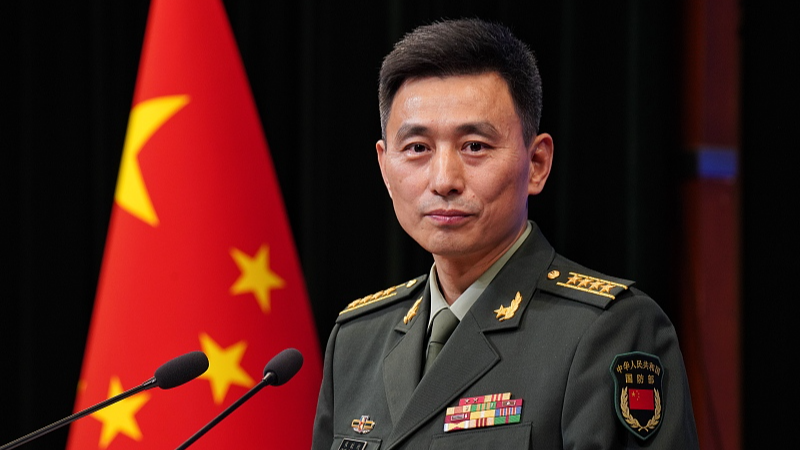
The news highlights China's contrasting narrative, as reported by CGTN. At a press conference, a spokesperson for China's Ministry of National Defense accused Japan of provocations and misleading the public regarding China's Liaoning aircraft carrier's training exercises. China insists these exercises comply with international law, urging Japan to reflect on its actions to avoid a return to militaristic paths. This reflects a significant divergence in perspectives, with China framing its activities as routine and legitimate, while accusing Japan of unnecessary escalation.
It appears that while Liberty Times focuses on the severity and potential risks of these encounters, CGTN emphasizes China's stance on lawful military exercises, portraying Japan as the provocateur. This duality in reporting highlights the complex interplay of national narratives in international military disputes.
The Return of South Korea's Presidential Office to Cheong Wa Dae
Recent events show a significant shift in South Korean politics with the decision to move the presidential office back to Cheong Wa Dae. According to CCTV, the South Korean government announced that the relocation from the temporary office in Seoul's Yongsan district to the historic Cheong Wa Dae will be completed by the end of December. This move marks the end of what has been termed the 'Yongsan era'. The news highlights that Cheong Wa Dae has been meticulously restored, with improvements to its environmental and communication infrastructure.
Similarly, Sina reports that the presidential office will return to its original location, with plans to conduct online press conferences to enhance communication. The article mentions the so-called 'Cheong Wa Dae curse', a term used in South Korean politics referring to the scrutiny and political challenges faced by former presidents. The report suggests that breaking this 'curse' is a priority for political stability in the country.
These developments indicate a strategic political maneuver, as both articles emphasize the historical significance of Cheong Wa Dae as the traditional seat of power since 1948. It appears that the return aligns with long-term plans to decentralize the administration to Sejong City, although this idea remains under discussion. The coverage by CCTV focuses more on the logistical aspects of the move, while Sina delves into the symbolic and political implications, highlighting the public's expectation for political stability and reform.
Honduras Election Stalemate: A Nation Holds Its Breath
In the recent presidential elections in Honduras, a tense stalemate has gripped the nation, as highlighted by Liberty Times. The article notes that the vote-counting process has been fraught with delays, with election officials taking nearly 48 hours without updating the public on progress. This has led to growing frustration among citizens, who are anxious to see the results unfold. The Liberty Times emphasizes the narrow lead held by the National Party's candidate, Nasry Asfura, over the Liberal Party's Salvador Nasralla, with a mere difference of fewer than 20,000 votes.
Similarly, World Journal reports on the heightened tension surrounding the election, focusing on a small village where delayed voting has inadvertently turned it into a national focal point. The article describes how the village of San Antonio de Flores became a battleground, with both leading candidates vying for every crucial vote. The World Journal further adds a geopolitical dimension, noting that the election outcome could influence U.S. President Biden's ability to maintain influence in the region.
Both publications highlight the charged atmosphere and the critical nature of every single vote in this tightly contested race. Liberty Times provides a detailed account of the procedural delays and public sentiment, while World Journal offers a broader perspective on the international implications and the symbolic importance of the election. Together, these narratives paint a comprehensive picture of a nation in suspense, awaiting the resolution of its democratic process.
Analyzing Perspectives on Recent Political Trends in China
Recent events show a divergence in how Chinese media outlets present political narratives, particularly surrounding weekly summaries of political developments. Sina offers a vibrant and engaging approach, emphasizing reader interaction and feedback. The platform highlights popular video content and encourages public discourse, suggesting a strategy to foster a sense of community engagement and transparency.
In contrast, CCTV's coverage is notably sparse, focusing on directing audiences to their main website. This approach may align with a more controlled dissemination of information, prioritizing centralized access over interactive engagement. The brevity of the content could indicate a strategic choice to maintain a concise and authoritative narrative.
These developments indicate a broader trend in which Chinese media outlets are navigating the balance between engagement and control. The news highlights the differing intentions behind how such summaries are crafted, with Sina leaning towards a participatory model and CCTV adhering to a streamlined, official stance.